
Mission Biotechnologies Sdn. Bhd
Add a review FollowOverview
-
Founded Date December 30, 1989
-
Sectors test
-
Posted Jobs 0
-
Viewed 292
Company Description
Cotton Waste Biofuel Powers Farmers to Combat Drought In Kenya
By Nita Bhalla
KITUI, Kenya, June 6 (Thomson Reuters Foundation) – Kenyan farmer Abel Mutie Mathoka believed it should be a joke when he was informed he might irrigate his drought-hit crops more cheaply, easily and effectively using a pump sustained by cotton waste.

“Who could believe it’s possible to make a fuel much better than diesel from cotton seeds? I didn’t!” chuckled Mathoka, crouching down to check the watermelons on his 10-acre (four-hectare) shared plot in Ituri village in Kenya’s southeast Kitui county.
“But it works,” he stated, strolling over to a close-by tree and plucking a big green pawpaw. “Irrigation with this biodiesel water pump has assisted me get higher yields, particularly during drought periods.”
Mathoka stated his profits had actually doubled in the two years he has been pumping water utilizing biodiesel, which is both more efficient and 20 shillings ($0.20) per litre cheaper than regular diesel.
The biodiesel he is utilizing is not just excellent news for him – it is also excellent news for the world.
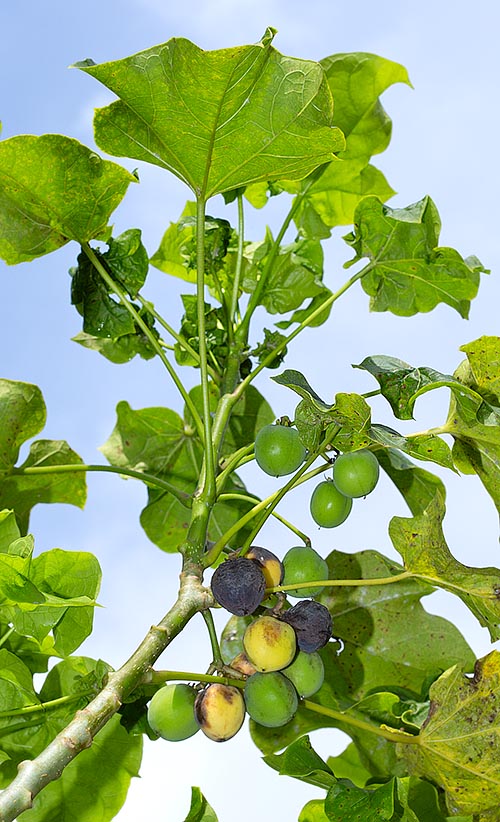
Unlike most biofuels, which are derived from crops such as maize, sugarcane, soybean, rapeseed and jatropha, it is made from a by-product of the cotton-making procedure.
That suggests that in addition to being cleaner and more affordable than routine fuel, it is more sustainable than other biofuels because no extra land is needed to produce it.
From Brazil to Indonesia, the rush to cultivate biofuel crops has actually driven forest neighborhoods off their land and pushed farmers to switch from crops-for-food to more lucrative crops-for-fuel – intensifying food shortages.

“Our biodiesel originates from squashing cotton seeds left over as waste after ginning – the process of separating the seeds from raw cotton,” stated Taher Zavery, handling director of Zaynagro Industries Ltd, the Kitui-based business producing the biodiesel.
“We started producing and utilizing it to power our cotton ginning factory in 2011. With increased production, we now utilize it for our trucks, sell it to the United Nations to run some of their buses – and likewise to local farmers for watering.”
More than 1,200 farmers in Kitui have actually up until now invested in biodiesel pumps for watering as part of an initiative released by Zaynagro in 2015, said Zavery.
DRY RIVER BEDS
Climate change is taking a toll throughout east Africa and increasingly unpredictable weather condition is becoming commonplace in nations such as Kenya, Somalia, Uganda and Ethiopia, leading to lower rainfall.
The recurring dry spells are damaging crops and pastures and are starving animals – pushing countless individuals in the Horn of Africa to the brink of severe cravings.
The number of Kenyans in need of food help in March surged by almost 70 percent over a period of eight months to 1.1 million, mainly due to bad rains, according to federal government figures.
With almost half Kenya’s 47 counties declared to have a severe scarcity of rain, humanitarian firms are cautioning of increased cravings in the months ahead.
“Only light rains is anticipated through June … and this is not expected to alleviate dry spell in affected areas of Kenya and Somalia,” stated the Famine Early Warning Systems Network in its most current report.
“Well below-average crop production, bad animals body conditions, and increased regional food prices are anticipated, which will minimize poor homes’ access to food.”
In Kitui’s Kyuso area, the signs are currently obvious.
Rivers, water pans and dams are drying up as a result of the prolonged drought.
Villagers grumble of trekking longer distances – sometimes more than 10 km (6 miles) with their donkeys loaded with empty jerry cans searching for water.
Small-scale farmers, most of whom are reliant on rain-fed farming, discuss plans to offer their goats to make ends satisfy if the harvest is poor.
BATTLING DROUGHT WITH BIODIESEL
But not all Kitui’s farmers are fretted.
A little however growing number are shedding their burden of dependence on the weather – and buying irrigation systems powered by Zaynagro’s cotton seed biodiesel through a pay-as-you-go scheme introduced more than three years earlier.
Neighbouring farmers band together to buy the irrigation system – that includes the biodiesel pump, 12 metres of pipes and 10 litres of biodiesel – at expenses beginning with 32,000 shillings, depending upon the size of the pump.
The farmers make an initial payment, then pay interest-free month-to-month instalments until the overall is paid off. They purchase the biodiesel to run the pumps from Zaynagro at 80 shillings a litre.
Farmer Alex Babu Kitheka, 39, said the biodiesel pump allowed him to water a bigger portion of his one-acre plot, where he grows a variety of veggies including maize, tomatoes, spinach and sweet potatoes.
“With a diesel pump, maize yields were lower and I would get 15,000 shillings in 3 months. With the biodiesel pump, I can earn 45,000 shillings,” stated Alex Babu Kitheka, standing near his plot in Ilangilo village, 40 km (25 miles) from Kitui town.
CIRCULAR ECONOMY
Other farmers indicate the scheme as a major advantage in assisting improve their output.
“The instalment scheme is good. Most farmers don’t have the cash and can not quickly get a loan to buy a pump like this,” said Maurice Kitheka Munyoki, 41, as he stood beside his blue biodiesel pump.
“Having a scheme like this assists us a lot. Our yields are excellent which indicates we can pay off the expense of the pump slowly in percentages, and have cash left over to pay the school fees.”
Zaynagro’s effort is still in its early phases, with couple of farmers having paid back the full cost of the pumps.
But such biofuel schemes are appealing since they develop a circular economy by turning waste to biofuel for earnings, stated Sanjoy Sanyal, senior partner for Clean Energy Finance at the World Resources Institute.
The simpleness of the model – easy-to-use, robust technology, assured supply of biodiesel combined with a pay-as-you-go scheme – could help amaze rural Africa, he said.
“There is a mosaic of sustainable energy alternatives on the planet. The key problem is checking ideas and methods in a collaborative style,” stated Sanyal.
“Other cotton ginning factories in the region should attempt and learn from this experiment. Financial organizations ought to start explore loans to groups of farmers. International donors and investors require to support experimentation.”
($1 = 101.3000 Kenyan shillings) (Reporting by Nita Bhalla @nitabhalla, Editing by Claire Cozens. Please credit the Thomson Reuters Foundation, the charitable arm of Thomson Reuters, that covers humanitarian news, and LGBT+ rights, human trafficking, property rights and environment modification. Visit http://news.trust.org)