
Yuluchelyano
Add a review FollowOverview
-
Founded Date June 4, 1972
-
Sectors test
-
Posted Jobs 0
-
Viewed 63
Company Description
Why Silicon Valley is Losing its Mind over this Chinese Chatbot
DeepSeek supposedly crafted a ChatGPT rival with far less time, cash, and resources than OpenAI.

Sign up for the Slatest to get the most informative analysis, criticism, and recommendations out there, provided to your inbox daily.
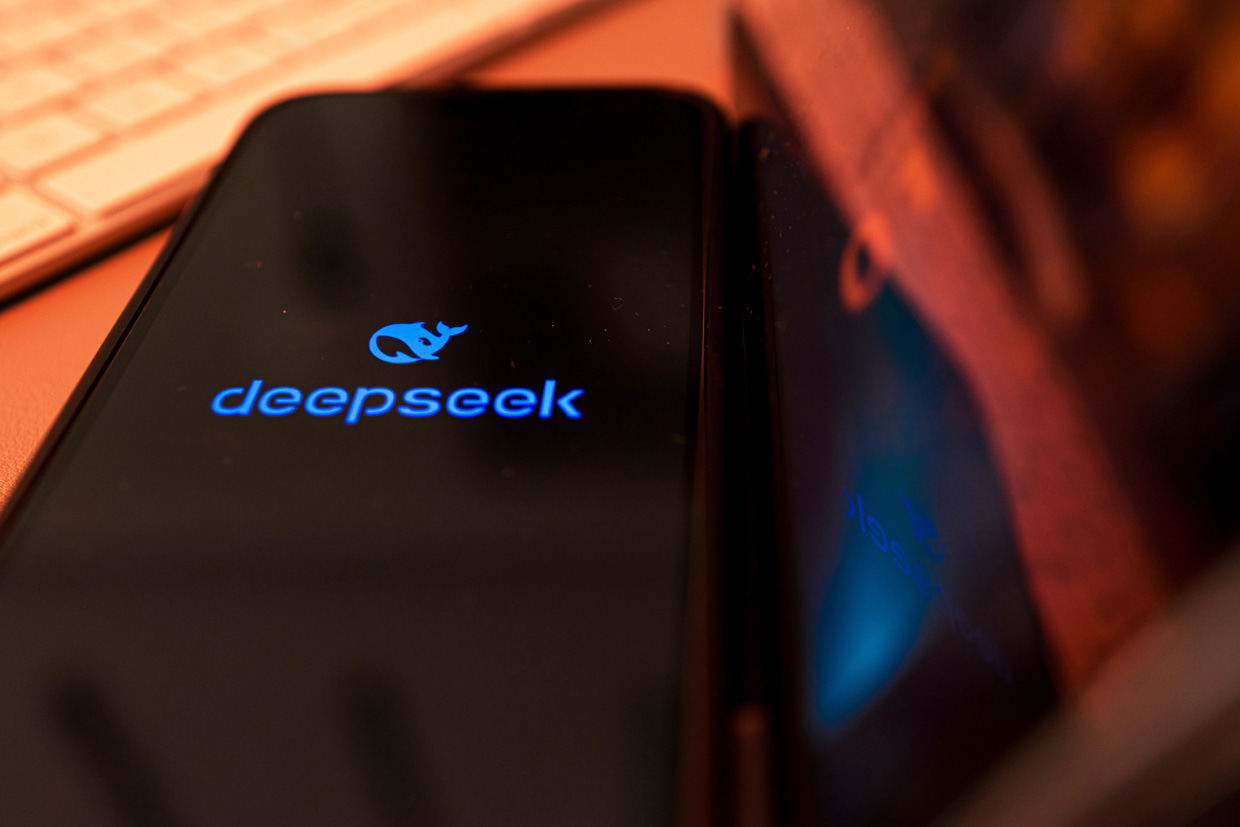
The United States may have started the A.I. arms race, but a Chinese app is now shaking it up. R1, a chatbot from the startup DeepSeek, is sitting pretty at the top of the Apple and Google app stores, since this writing. Mobile downloads are outpacing those of OpenAI’s renowned ChatGPT, and its capabilities are fairly equal to that of any modern American A.I. app.
R1 went live on Inauguration Day. After simply a week, it appeared to damage President Donald Trump’s guarantees that his second term would protect American A.I. supremacy. Yes, he stacked his advisory groups with A.I.-invested Silicon Valley executives, reversed the Biden administration’s federal A.I. requirements, and cheered on OpenAI’s $500 billion A.I. infrastructure endeavor. For the markets, none of it might beat the effects of R1’s popularity.
DeepSeek had supposedly crafted a feasible open-source ChatGPT rival with far less time, far less cash, much more material barriers, and far fewer resources than OpenAI. (CEO Sam Altman even had to admit that R1 is “a remarkable model.”) Now A.I. investors are losing their nerve and sending the stock indexes into panic mode, the Republican Party is drifting extra Chinese trade limitations, and Trump’s tech consultants, without a tip of paradox, are implicating DeepSeek of unjustly taking A.I. generations to train its own models.
How, and why, did this occur?
What the heck is DeepSeek?
DeepSeek was established in May 2023 by Liang Wenfeng, a Chinese software engineer and market trader with a deep background in artificial intelligence and computer system vision research. Before entering into chatbots, Liang worked as a knowledgeable quantitative trader who maximized his financial returns with the assistance of advanced algorithms. In 2016 he founded the hedge fund High-Flyer, which quickly turned into one of China’s most affluent investment houses thanks to Liang and Co.’s extensive usage of A.I. models for optimizing trades.
When the Communist Party started executing more stringent policies on speculative financing, Liang was already prepared to pivot. High-Flyer’s A.I. developments and experiments had led it to stock up on Nvidia’s the majority of potent graphic processing units-the high-efficiency chips that power so much these days’s most elite A.I. When the Biden administration started restricting exports of these more-powerful GPUs to Chinese tech firms in 2022, the point was to try to avoid China’s tech industry from attaining A.I. advances on par with Silicon Valley’s. However, High-Flyer was currently making ample use of its . In summer 2023, Liang established DeepSeek as a research-focused subsidiary of his hedge fund, one devoted to engineering A.I. that could take on the worldwide sensation ChatGPT.
So why did Nvidia’s stock worth crash?
You can trace the inciting occurrence to R1‘s abrupt appeal and the broader revelation of its Nvidia stockpile. Last November, one expert approximated that DeepSeek had tens of countless both high- and medium-power chips. CNN Business reported Monday that Nvidia’s value “fell almost 17% and lost $588.8 billion in market value-by far the most market value a stock has actually ever lost in a single day. … Nvidia lost more in market worth Monday than all however 13 companies are worth-period.” Since the Nasdaq and S&P 500 are dominated by tech stocks, markets that depend upon those tech business, and total A.I. hype, a lot of other highly capitalized companies likewise shed their value, though nowhere near to the extent Nvidia did.
Was this overblown panic, or are financiers ideal to be nervous??
There are really a lot of downstream ramifications-namely, just how much computing power and facilities are really required by advanced A.I., how much cash needs to be invested as an outcome, and what both those elements mean for how Silicon Valley works on A.I. moving forward.
It’s that much of a game changer?
Potentially, although some things are still unclear. The most necessary metrics to think about when it pertains to DeepSeek R1 are the most technical ones. As the New york city Times keeps in mind, “DeepSeek trained its A.I. chatbot with 2,000 specialized Nvidia chips, compared with as lots of as the 16,000 chips utilized by leading American equivalents.” That, ironically, may be an unexpected consequence of the Biden administration’s chips blockade, which required Chinese companies like DeepSeek to be more innovative and efficient with how they use their more limited resources.
As the MIT Technology Review writes, “DeepSeek needed to remodel its training process to reduce the strain on its GPUs.” R1 utilizes an analytical process comparable to the far more resource-intensive ChatGPT’s, but it minimizes overall energy use by aiming directly for much shorter, more precise outputs instead of setting out its detailed word-prediction procedure (you understand, the conversational fluff and recurring text common of ChatGPT responses).
Fewer chips, and less total energy usage for training and output, imply less expenses. According to the white paper DeepSeek launched for its V3 large language design (the neural network that DeepSeek’s chatbots draw upon), final training costs came out to just $5.58 million. While the company admits that this figure doesn’t factor in the money splurged throughout the prior actions of the structure procedure, it’s still indicative of some exceptional cost-cutting. By way of comparison, OpenAI’s most present, and many effective, GPT-4 design had a final training run that cost as much as $100 million. per Altman. Researchers have actually estimated that training for Meta’s and Google’s newest A.I. designs likely expense around the exact same amount. (The research study company SemiAnalysis estimates, however, that DeepSeek’s “pre-training” structure procedure most likely expense as much as $500 million.)
So what you’re stating is, R1 is rather efficient.

From what we understand, yes. Further, OpenAI, Google, Anthropic, and a couple of other significant American A.I. gamers have actually executed high subscription expenses for their products (in order to make up for the expenses) and provided less and less transparency around the code and information utilized to build and train said items (in order to maintain their competitive edges). By contrast, DeepSeek is using a bunch of complimentary and quick functions, including smaller sized, open-source variations of its latest chatbots that require very little energy usage. There’s a reason energies and fossil-fuel companies, whose future development forecasts depend a lot on A.I.’s power demands, were amongst the stocks that fell Monday.
Will American A.I. business adjust their technique?
The primary step that the U.S. tech market may take as a whole will be to acknowledge DeepSeek’s expertise while at the same time pressing back against it as an ominous force.
Meta AI, which open-sources Llama, is commemorating DeepSeek as a success for transparent advancement, and CEO Mark Zuckerberg informed financiers that R1 has “advances that we will want to carry out in our systems.” The CEO of Microsoft (which, naturally, has actually used sufficient infrastructure to OpenAI) credited DeepSeek with advancing “real innovations” and has added R1 to its business reference directory site of A.I. designs.
And as DeepSeek becomes just another variable in the U.S.-China tech wars, American A.I. executives are doubling down on the resource- and data-intensive method. Altman-whose once-tight relationship with Microsoft is supposedly fraying-tweeted that “more calculate is more crucial now than ever before,” suggesting that he and Microsoft both want those ginormous data centers to keep humming. Blackstone, which has actually invested $80 billion in information centers, has no strategies to reassess those expenses, and neither do the Wall Street financiers already dismissing DeepSeek as a bunch of hype.
Microsoft has likewise alleged that DeepSeek may have “wrongly” modeled its items by “distilling” OpenAI data. As White House A.I. and crypto czar David Sacks described to Fox News, the accusation is that DeepSeek’s bots asked OpenAI’s products “millions of concerns” and utilized the taking place outputs as example data that might train R1 to “imitate” ChatGPT’s processing strategies. (Sacks mentioned “substantial proof” of this but decreased to elaborate.)
Related From Slate
Shasha Léonard

Google Quietly Installed A.I. to My Workspace. Getting Rid of It Was Creepy.
Should users like myself be fretted about DeepSeek?

There are real reasons for daily users to be worried. DeepSeek’s own privacy policy states that it collects all input data and shops it in China-based servers. Wired reports that not just does DeepSeek self-censor its reactions to queries about Chinese authoritarianism, however it also sends data to other Chinese tech companies, including … TikTok moms and dad company ByteDance.
Popular in Technology
1. Google Quietly Installed A.I. to My Workspace. Getting Rid of It Was Creepy.
2. Your Infant Is Sick. If RFK Jr. Supervises, Your Emergency Department Visit May Look Very Different.
3. Why Silicon Valley Is Losing Its Mind Over This Chinese Chatbot
4. The First Big Trump Scam Is Already Blowing Up in Everyone’s Faces
The cloud-security company Wiz kept in mind in a research study report that DeepSeek has allowed big amounts of information to leak from its servers, and Italy has already prohibited the business from Italian app shops over data-use concerns. Ireland is likewise probing DeepSeek over information concerns, and executives for cybersecurity companies told Bloomberg that “hundreds” of their clients throughout the world, including and specifically governmental systems, are restricting staff members’ access to DeepSeek. In the U.S. proper, the National Security Council is examining the app, and the Navy has actually already prohibited its enlistees from using it entirely.
Where does American A.I. go from here?
Things will probably remain business as usual, although stateside companies will likely help themselves to DeepSeek’s open-source code and agitate for the U.S. federal government to secure down even more on trade with China. But that’ll just do so much, especially when Chinese tech giants like Alibaba are releasing models that they claim are much better than even DeepSeek’s. The race is on, and it’s going to include more money and energy than you could potentially envision. Maybe you can ask DeepSeek what it believes.
%20Is%20Used%20In%20Biometrics.jpg)
Get the finest of news and politics
Thanks for registering! You can manage your newsletter subscriptions at any time.