
Marine Cantabile
Add a review FollowOverview
-
Founded Date April 27, 1930
-
Sectors test
-
Posted Jobs 0
-
Viewed 62
Company Description
AI is ‘an Energy Hog,’ but DeepSeek Might Change That
Science/
Environment/
Climate.
AI is ‘an energy hog,’ however DeepSeek might alter that
DeepSeek declares to utilize far less energy than its competitors, but there are still huge questions about what that means for the environment.
)
by Justine Calma
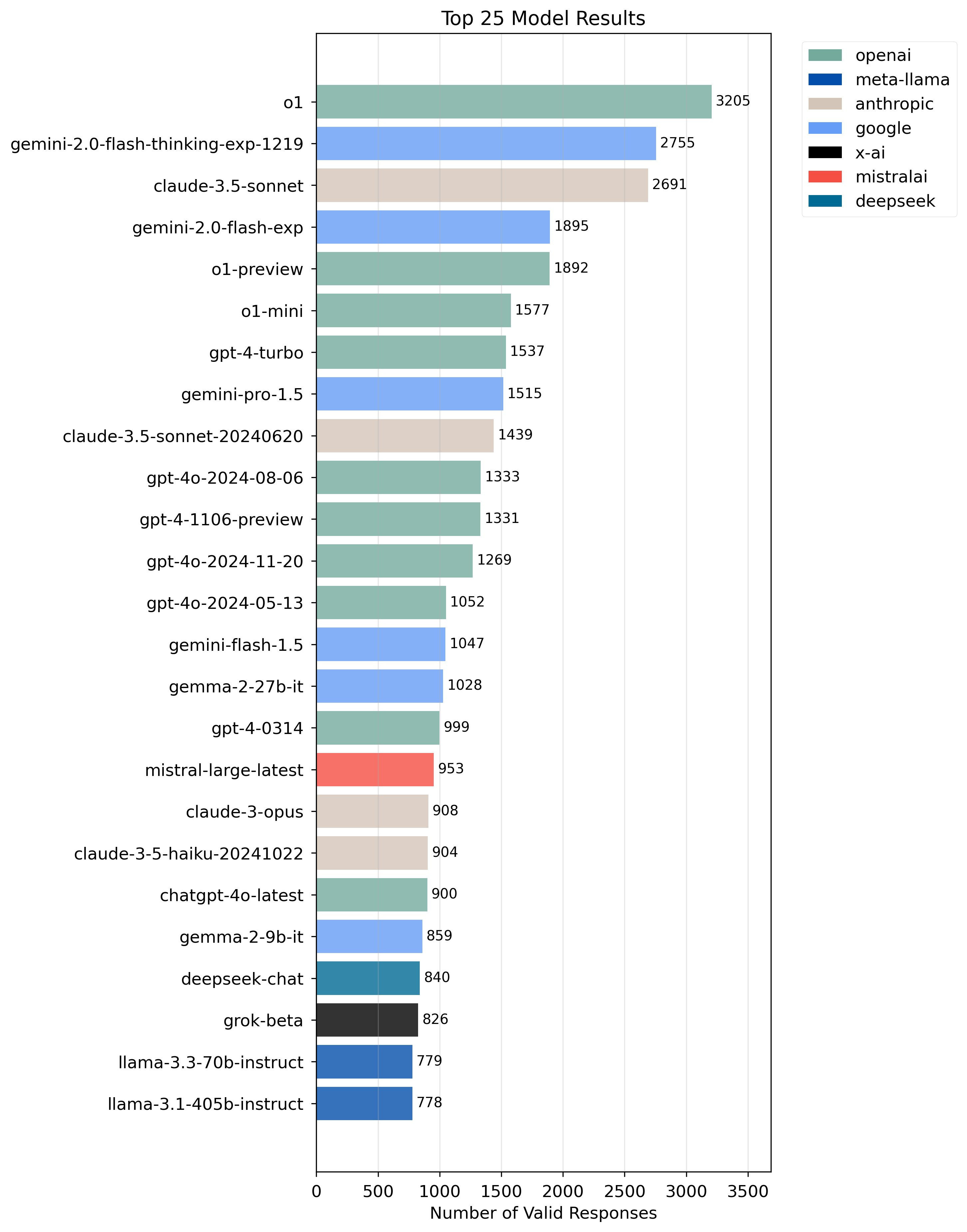
DeepSeek shocked everyone last month with the claim that its AI model utilizes roughly one-tenth the quantity of calculating power as Meta’s Llama 3.1 model, upending an entire worldview of how much energy and resources it’ll require to develop synthetic intelligence.
Taken at face value, that declare could have tremendous ramifications for the environmental effect of AI. Tech giants are hurrying to develop out massive AI data centers, with prepare for some to utilize as much electricity as small cities. Generating that much electricity develops pollution, raising worries about how the physical facilities undergirding new generative AI tools might worsen environment change and aggravate air quality.
Reducing just how much energy it takes to train and run generative AI models could relieve much of that tension. But it’s still prematurely to determine whether DeepSeek will be a game-changer when it pertains to AI‘s environmental footprint. Much will depend upon how other significant gamers respond to the Chinese startup’s developments, especially thinking about strategies to build new data centers.

” There’s a choice in the matter.”
” It just shows that AI doesn’t need to be an energy hog,” states Madalsa Singh, a postdoctoral research study fellow at the University of California, Santa Barbara who studies energy systems. “There’s an option in the matter.”
The fuss around DeepSeek started with the release of its V3 design in December, which only cost $5.6 million for its final training run and 2.78 million GPU hours to train on Nvidia’s older H800 chips, according to a technical report from the company. For comparison, Meta’s Llama 3.1 405B model – despite using newer, more efficient H100 took about 30.8 million GPU hours to train. (We do not know specific costs, however estimates for Llama 3.1 405B have actually been around $60 million and in between $100 million and $1 billion for comparable designs.)

Then DeepSeek released its R1 design recently, which investor Marc Andreessen called “a profound present to the world.” The company’s AI assistant rapidly shot to the top of Apple’s and Google’s app stores. And on Monday, it sent competitors’ stock prices into a nosedive on the assumption DeepSeek was able to produce an option to Llama, Gemini, and ChatGPT for a portion of the spending plan. Nvidia, whose chips make it possible for all these technologies, saw its stock cost plunge on news that DeepSeek’s V3 just required 2,000 chips to train, compared to the 16,000 chips or more required by its rivals.
DeepSeek states it was able to minimize how much electrical energy it takes in by utilizing more efficient training methods. In technical terms, it utilizes an auxiliary-loss-free method. Singh states it comes down to being more selective with which parts of the design are trained; you don’t need to train the whole design at the exact same time. If you believe of the AI design as a huge customer care company with many experts, Singh states, it’s more selective in picking which specialists to tap.
The model likewise saves energy when it concerns inference, which is when the design is actually charged to do something, through what’s called crucial value caching and compression. If you’re writing a story that needs research study, you can believe of this method as comparable to being able to reference index cards with top-level summaries as you’re composing instead of needing to read the entire report that’s been summarized, Singh describes.
What Singh is particularly optimistic about is that DeepSeek’s designs are mainly open source, minus the training data. With this approach, scientists can gain from each other faster, and it opens the door for smaller sized gamers to go into the market. It also sets a precedent for more transparency and responsibility so that investors and consumers can be more critical of what resources go into developing a model.
There is a double-edged sword to consider
” If we have actually shown that these innovative AI capabilities do not need such massive resource consumption, it will open a bit more breathing room for more sustainable facilities planning,” Singh states. “This can also incentivize these established AI laboratories today, like Open AI, Anthropic, Google Gemini, towards establishing more effective algorithms and techniques and move beyond sort of a strength technique of merely including more information and calculating power onto these designs.”
To be sure, there’s still hesitation around DeepSeek. “We have actually done some digging on DeepSeek, but it’s hard to discover any concrete facts about the program’s energy usage,” Carlos Torres Diaz, head of power research at Rystad Energy, stated in an email.
If what the company declares about its energy use is true, that might slash an information center’s total energy consumption, Torres Diaz writes. And while huge tech business have actually signed a flurry of offers to acquire renewable resource, soaring electrical energy demand from data centers still runs the risk of siphoning restricted solar and wind resources from power grids. Reducing AI’s electrical energy consumption “would in turn make more sustainable energy available for other sectors, assisting displace quicker the use of nonrenewable fuel sources,” according to Torres Diaz. “Overall, less power need from any sector is beneficial for the worldwide energy shift as less fossil-fueled power generation would be needed in the long-term.”
There is a double-edged sword to consider with more energy-efficient AI models. Microsoft CEO Satya Nadella composed on X about Jevons paradox, in which the more effective a technology ends up being, the most likely it is to be utilized. The ecological damage grows as an outcome of performance gains.
” The concern is, gee, if we could drop the energy usage of AI by an aspect of 100 does that mean that there ‘d be 1,000 information companies being available in and stating, ‘Wow, this is excellent. We’re going to construct, construct, construct 1,000 times as much even as we prepared’?” states Philip Krein, research study teacher of electrical and computer system engineering at the University of Illinois Urbana-Champaign. “It’ll be a truly fascinating thing over the next ten years to enjoy.” Torres Diaz likewise said that this issue makes it too early to revise power consumption projections “substantially down.”
No matter how much electricity a data center uses, it’s essential to take a look at where that electricity is originating from to understand how much contamination it creates. China still gets more than 60 percent of its electrical energy from coal, and another 3 percent comes from gas. The US likewise gets about 60 percent of its electrical power from nonrenewable fuel sources, but a bulk of that originates from gas – which produces less carbon dioxide pollution when burned than coal.
To make things worse, energy business are delaying the retirement of fossil fuel power plants in the US in part to meet escalating demand from data centers. Some are even preparing to develop out brand-new gas plants. Burning more nonrenewable fuel sources undoubtedly causes more of the pollution that triggers environment change, in addition to regional air toxins that raise health risks to neighboring neighborhoods. Data centers also guzzle up a lot of water to keep hardware from overheating, which can cause more tension in drought-prone areas.
Those are all issues that AI developers can lessen by limiting energy use overall. Traditional information centers have had the ability to do so in the past. Despite work almost tripling between 2015 and 2019, power need managed to stay reasonably flat throughout that time period, according to Goldman Sachs Research. Data centers then grew far more power-hungry around 2020 with advances in AI. They consumed more than 4 percent of electrical energy in the US in 2023, which might almost triple to around 12 percent by 2028, according to a December report from the Lawrence Berkeley National Laboratory. There’s more unpredictability about those sort of forecasts now, but calling any shots based on DeepSeek at this moment is still a shot in the dark.