
Towingdrivers
Add a review FollowOverview
-
Founded Date February 10, 1943
-
Sectors test
-
Posted Jobs 0
-
Viewed 105
Company Description
Understanding DeepSeek R1
We have actually been tracking the explosive increase of DeepSeek R1, which has actually taken the AI world by storm in current weeks. In this session, we dove deep into the development of the DeepSeek household – from the early models through DeepSeek V3 to the breakthrough R1. We likewise explored the technical developments that make R1 so special on the planet of open-source AI.
The DeepSeek Family Tree: From V3 to R1
DeepSeek isn’t simply a single design; it’s a family of increasingly sophisticated AI systems. The evolution goes something like this:
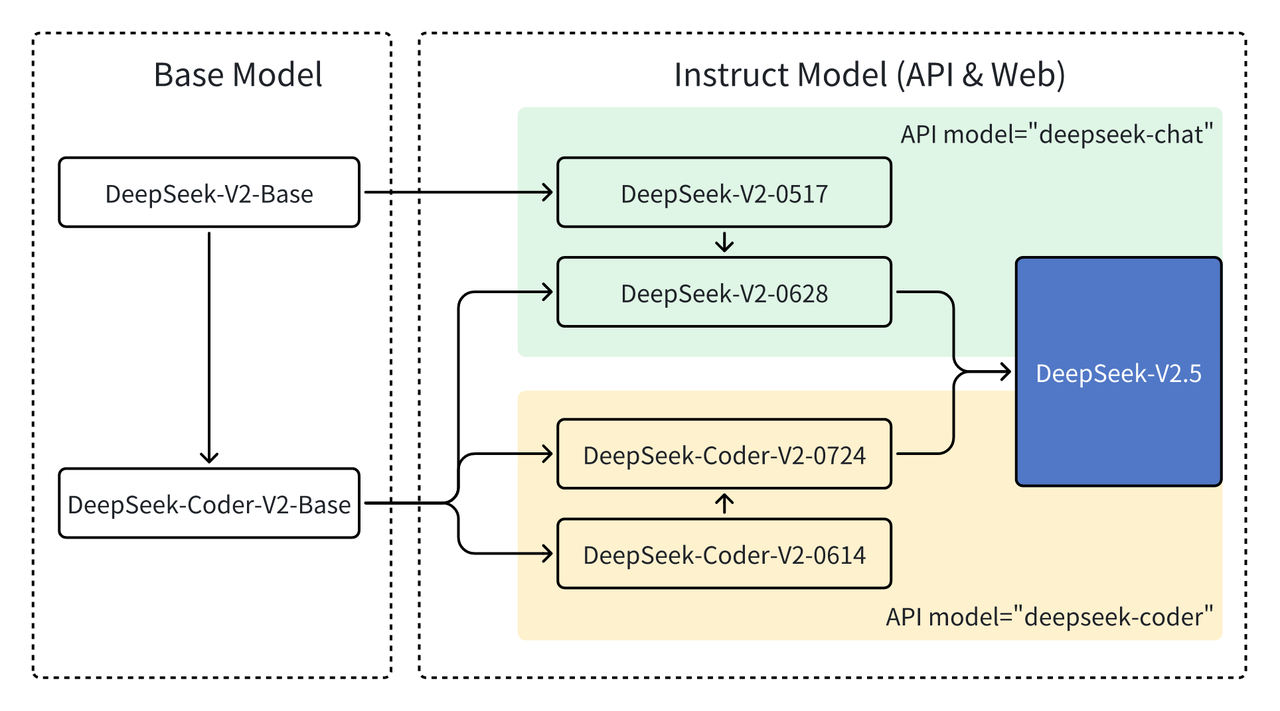
DeepSeek V2:
This was the structure design which leveraged a mixture-of-experts architecture, where just a subset of professionals are utilized at reasoning, drastically improving the processing time for each token. It also featured multi-head hidden attention to lower memory footprint.
DeepSeek V3:
This design introduced FP8 training techniques, which assisted drive down training expenses by over 42.5% compared to previous models. FP8 is a less precise method to keep weights inside the LLMs however can greatly improve the memory footprint. However, training using FP8 can typically be unstable, and it is hard to obtain the desired training outcomes. Nevertheless, DeepSeek utilizes multiple tricks and attains incredibly steady FP8 training. V3 set the phase as an extremely effective model that was already affordable (with claims of being 90% less expensive than some closed-source options).
DeepSeek R1-Zero:
With V3 as the base, gratisafhalen.be the team then presented R1-Zero, the very first reasoning-focused model. Here, the focus was on teaching the model not just to generate responses but to “think” before addressing. Using pure support learning, the design was encouraged to produce intermediate reasoning actions, for example, taking extra time (often 17+ seconds) to overcome an easy problem like “1 +1.”
The key development here was the usage of group relative policy optimization (GROP). Instead of counting on a standard procedure reward model (which would have needed annotating every step of the thinking), GROP compares multiple outputs from the model. By sampling numerous prospective answers and scoring them (using rule-based steps like specific match for mathematics or validating code outputs), the system finds out to favor reasoning that causes the correct outcome without the need for specific guidance of every intermediate thought.
DeepSeek R1:
Recognizing that R1-Zero’s not being watched approach produced reasoning outputs that could be hard to check out or even blend languages, the developers returned to the drawing board. They utilized the raw outputs from R1-Zero to generate “cold start” information and after that manually curated these examples to filter and enhance the quality of the reasoning. This human post-processing was then used to fine-tune the initial DeepSeek V3 model further-combining both reasoning-oriented support learning and supervised fine-tuning. The result is DeepSeek R1: a model that now produces legible, coherent, and reliable thinking while still maintaining the efficiency and cost-effectiveness of its predecessors.

What Makes R1 Series Special?
The most fascinating element of R1 (no) is how it developed thinking capabilities without explicit supervision of the reasoning procedure. It can be even more improved by utilizing cold-start data and monitored reinforcement discovering to produce legible reasoning on basic tasks. Here’s what sets it apart:
Open Source & Efficiency:
R1 is open source, permitting researchers and designers to inspect and build upon its innovations. Its expense effectiveness is a major selling point particularly when compared to closed-source designs (claimed 90% more affordable than OpenAI) that need huge compute spending plans.
Novel Training Approach:
Instead of relying exclusively on annotated reasoning (which is both pricey and lengthy), the model was trained utilizing an outcome-based technique. It began with quickly verifiable jobs, such as math issues and coding exercises, where the accuracy of the last response might be easily measured.
By utilizing group relative policy optimization, the training process compares several generated answers to identify which ones fulfill the wanted output. This relative scoring mechanism permits the model to find out “how to believe” even when intermediate thinking is created in a freestyle way.
Overthinking?
A fascinating observation is that DeepSeek R1 often “overthinks” simple problems. For example, when asked “What is 1 +1?” it may invest nearly 17 seconds evaluating different scenarios-even thinking about binary representations-before concluding with the proper response. This self-questioning and confirmation process, although it might seem ineffective in the beginning glimpse, might prove advantageous in complicated tasks where much deeper reasoning is needed.
Prompt Engineering:
Traditional few-shot triggering methods, larsaluarna.se which have worked well for lots of chat-based designs, can in fact break down efficiency with R1. The designers advise using direct problem statements with a zero-shot method that specifies the output format plainly. This makes sure that the model isn’t led astray by extraneous examples or tips that might interfere with its internal thinking process.
Getting Going with R1
For those aiming to experiment:
Smaller versions (7B-8B) can work on consumer GPUs and even just CPUs
Larger versions (600B) need considerable calculate resources
Available through major cloud providers
Can be released locally via Ollama or vLLM
Looking Ahead
We’re especially captivated by several ramifications:
The potential for this approach to be applied to other thinking domains
Influence on agent-based AI systems typically developed on chat designs
Possibilities for combining with other guidance strategies
Implications for enterprise AI release
Thanks for reading Deep Random Thoughts! Subscribe totally free to receive brand-new posts and support my work.
Open Questions
How will this impact the advancement of future thinking designs?
Can this technique be extended to less verifiable domains?
What are the ramifications for multi-modal AI systems?
We’ll be watching these developments closely, especially as the neighborhood begins to explore and build on these methods.
Resources
Join our Slack neighborhood for continuous conversations and updates about DeepSeek and other AI advancements. We’re seeing remarkable applications currently emerging from our bootcamp individuals dealing with these designs.
Chat with DeepSeek:
https://www.deepseek.com/
Papers:
DeepSeek LLM
DeepSeek-V2
DeepSeek-V3
DeepSeek-R1
Blog Posts:
The Illustrated DeepSeek-R1
DeepSeek-R1 Paper Explained
DeepSeek R1 – a brief summary
Cloud Providers:
Nvidia
Together.ai
AWS
Q&A
Q1: Which model deserves more attention – DeepSeek or Qwen2.5 Max?
A: While Qwen2.5 is also a strong model in the open-source neighborhood, the choice eventually depends on your use case. DeepSeek R1 emphasizes innovative thinking and an unique training approach that may be particularly important in jobs where verifiable reasoning is crucial.
Q2: Why did major service providers like OpenAI choose supervised fine-tuning rather than support knowing (RL) like DeepSeek?
A: We must note in advance that they do use RL at the minimum in the form of RLHF. It is most likely that designs from significant providers that have thinking capabilities currently use something similar to what DeepSeek has actually done here, but we can’t make certain. It is likewise most likely that due to access to more resources, they favored supervised fine-tuning due to its stability and the prepared availability of big annotated datasets. Reinforcement learning, although effective, can be less foreseeable and more difficult to control. DeepSeek’s technique innovates by using RL in a reasoning-oriented way, enabling the model to find out reliable internal thinking with only very little process annotation – a strategy that has shown promising despite its intricacy.
Q3: Did DeepSeek utilize test-time compute methods similar to those of OpenAI?
A: DeepSeek R1’s design highlights efficiency by leveraging methods such as the mixture-of-experts technique, which activates only a subset of specifications, to decrease calculate throughout reasoning. This concentrate on efficiency is main to its cost advantages.
Q4: What is the difference in between R1-Zero and R1?
A: R1-Zero is the preliminary model that learns reasoning solely through reinforcement knowing without specific procedure guidance. It generates intermediate reasoning actions that, while sometimes raw or mixed in language, function as the foundation for learning. DeepSeek R1, on the other hand, refines these outputs through human post-processing and monitored fine-tuning. In essence, R1-Zero supplies the without supervision “spark,” and R1 is the refined, more coherent variation.
Q5: How can one remain updated with thorough, technical research while handling a hectic schedule?
A: Remaining present includes a combination of actively engaging with the research study neighborhood (like AISC – see link to join slack above), following preprint servers like arXiv, attending pertinent conferences and webinars, and taking part in discussion groups and newsletters. Continuous engagement with online neighborhoods and collaborative research projects also plays an essential role in keeping up with technical developments.
Q6: In what use-cases does DeepSeek surpass designs like O1?
A: The brief answer is that it’s too early to tell. DeepSeek R1’s strength, nevertheless, disgaeawiki.info lies in its robust reasoning capabilities and its performance. It is particularly well fit for jobs that require proven logic-such as mathematical issue resolving, code generation, and structured decision-making-where intermediate reasoning can be reviewed and validated. Its open-source nature even more permits for tailored applications in research and enterprise settings.
Q7: What are the ramifications of DeepSeek R1 for enterprises and start-ups?
A: The open-source and cost-effective design of DeepSeek R1 decreases the entry barrier for releasing advanced language designs. Enterprises and start-ups can take advantage of its advanced thinking for agentic applications varying from automated code generation and consumer assistance to data analysis. Its versatile implementation options-on customer hardware for smaller models or cloud platforms for bigger ones-make it an attractive option to proprietary services.
Q8: Will the model get stuck in a loop of “overthinking” if no correct answer is discovered?

A: While DeepSeek R1 has been observed to “overthink” simple issues by checking out numerous thinking courses, it includes stopping criteria and assessment systems to prevent infinite loops. The reinforcement finding out structure motivates merging toward a proven output, even in uncertain cases.
Q9: Is DeepSeek V3 completely open source, and is it based on the Qwen architecture?
A: Yes, DeepSeek V3 is open source and acted as the foundation for later versions. It is constructed on its own set of innovations-including the mixture-of-experts method and FP8 training-and is not based upon the Qwen architecture. Its design stresses efficiency and cost decrease, setting the stage for the thinking developments seen in R1.
Q10: How does DeepSeek R1 perform on vision tasks?
A: DeepSeek R1 is a text-based model and does not include vision capabilities. Its style and training focus exclusively on language processing and reasoning.

Q11: Can specialists in specialized fields (for example, labs dealing with cures) apply these techniques to models?
A: Yes. The developments behind DeepSeek R1-such as its outcome-based reasoning training and efficient architecture-can be adapted to numerous domains. Researchers in fields like biomedical sciences can tailor these techniques to develop designs that address their particular challenges while gaining from lower compute costs and robust reasoning capabilities. It is likely that in deeply specialized fields, nevertheless, there will still be a need for monitored fine-tuning to get reputable results.
Q12: Were the annotators for the human post-processing specialists in technical fields like computer technology or mathematics?
A: The discussion suggested that the annotators mainly focused on domains where correctness is easily verifiable-such as math and coding. This suggests that expertise in technical fields was certainly leveraged to ensure the accuracy and clearness of the reasoning data.
Q13: Could the design get things incorrect if it depends on its own outputs for discovering?
A: While the model is designed to optimize for mediawiki.hcah.in proper answers by means of reinforcement learning, there is constantly a risk of errors-especially in uncertain scenarios. However, by assessing several prospect outputs and strengthening those that lead to verifiable results, the training procedure decreases the possibility of propagating incorrect thinking.
Q14: How are hallucinations minimized in the model offered its iterative thinking loops?
A: Using rule-based, verifiable tasks (such as math and coding) assists anchor the design’s thinking. By comparing several outputs and utilizing group relative policy optimization to reinforce only those that yield the proper result, the model is assisted far from producing unproven or hallucinated details.
Q15: Does the model rely on complex vector mathematics?
A: Yes, advanced techniques-including complex vector math-are essential to the application of mixture-of-experts and attention systems in DeepSeek R1. However, the main focus is on using these methods to enable effective reasoning rather than showcasing mathematical complexity for its own sake.
Q16: Some stress that the model’s “thinking” may not be as refined as human reasoning. Is that a valid concern?
A: Early models like R1-Zero did produce raw and often hard-to-read thinking. However, the subsequent refinement process-where human specialists curated and enhanced the thinking data-has substantially boosted the clearness and dependability of DeepSeek R1’s internal idea procedure. While it remains an evolving system, it-viking.ch iterative training and feedback have actually led to significant improvements.
Q17: Which model versions appropriate for local implementation on a laptop with 32GB of RAM?
A: For local testing, a medium-sized model-typically in the range of 7B to 8B parameters-is suggested. Larger models (for instance, those with hundreds of billions of specifications) need considerably more computational resources and are better matched for cloud-based implementation.
Q18: Is DeepSeek R1 “open source” or does it provide just open weights?
A: DeepSeek R1 is offered with open weights, indicating that its design criteria are openly available. This aligns with the general open-source philosophy, allowing researchers and designers to more explore and build on its developments.
Q19: What would take place if the order of training were reversed-starting with monitored fine-tuning before unsupervised support knowing?
A: systemcheck-wiki.de The current technique allows the model to initially check out and produce its own thinking patterns through unsupervised RL, and after that improve these patterns with monitored techniques. Reversing the order might constrain the design’s capability to discover diverse thinking paths, possibly limiting its general efficiency in jobs that gain from autonomous idea.
Thanks for checking out Deep Random Thoughts! Subscribe for complimentary to get new posts and support my work.