Dataprolabs
Add a review FollowOverview
-
Founded Date April 2, 1953
-
Sectors test
-
Posted Jobs 0
-
Viewed 56
Company Description
China’s Cheap, Open AI Model DeepSeek Thrills Scientists
These designs create responses step-by-step, in a process analogous to human reasoning. This makes them more skilled than earlier language designs at fixing scientific problems, and indicates they might be helpful in research study. Initial tests of R1, launched on 20 January, show that its performance on specific tasks in chemistry, mathematics and coding is on a par with that of o1 – which wowed scientists when it was released by OpenAI in September.
“This is wild and absolutely unexpected,” Elvis Saravia, an expert system (AI) scientist and co-founder of the UK-based AI consulting company DAIR.AI, composed on X.
R1 stands apart for another reason. DeepSeek, the start-up in Hangzhou that constructed the design, has launched it as ‘open-weight’, suggesting that researchers can study and construct on the algorithm. Published under an MIT licence, the model can be freely recycled but is ruled out completely open source, because its training data have not been made available.
“The openness of DeepSeek is quite impressive,” says Mario Krenn, leader of the Artificial Scientist Lab at the Max Planck Institute for the Science of Light in Erlangen, Germany. By contrast, o1 and other designs constructed by OpenAI in San Francisco, California, including its latest effort, o3, are “basically black boxes”, he says.AI hallucinations can’t be stopped – but these techniques can restrict their damage
DeepSeek hasn’t launched the full cost of training R1, but it is charging individuals utilizing its user interface around one-thirtieth of what o1 costs to run. The company has actually likewise produced mini ‘distilled’ versions of R1 to allow scientists with restricted computing power to have fun with the model. An “experiment that cost more than ₤ 300 [US$ 370] with o1, cost less than $10 with R1,” states Krenn. “This is a dramatic difference which will definitely contribute in its future adoption.”
Challenge models

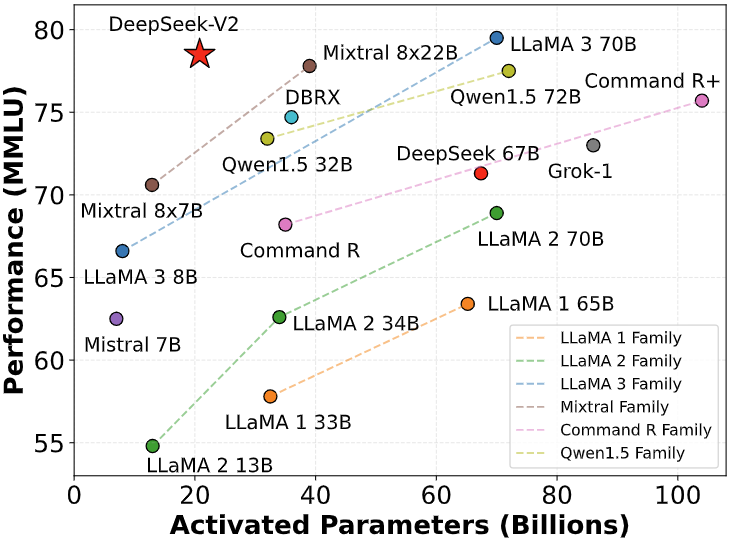
R1 becomes part of a boom in Chinese large language designs (LLMs). Spun off a hedge fund, DeepSeek emerged from relative obscurity last month when it released a chatbot called V3, which exceeded major rivals, in spite of being constructed on a shoestring budget. Experts estimate that it cost around $6 million to rent the hardware required to train the model, with upwards of $60 million for Meta’s Llama 3.1 405B, which utilized 11 times the computing resources.
Part of the buzz around DeepSeek is that it has actually prospered in making R1 despite US export manages that limit Chinese companies’ access to the finest computer system chips created for AI processing. “The truth that it comes out of China reveals that being efficient with your resources matters more than calculate scale alone,” states François Chollet, an AI scientist in Seattle, Washington.

DeepSeek’s progress recommends that “the viewed lead [that the] US as soon as had has actually narrowed considerably”, Alvin Wang Graylin, a technology specialist in Bellevue, Washington, who operates at the Taiwan-based immersive technology firm HTC, wrote on X. “The 2 countries require to pursue a collective technique to structure advanced AI vs continuing the current no-win arms-race technique.”
Chain of thought
LLMs train on billions of samples of text, snipping them into word-parts, called tokens, and discovering patterns in the data. These associations enable the design to anticipate subsequent tokens in a sentence. But LLMs are vulnerable to developing realities, a phenomenon called hallucination, and frequently battle to reason through issues.