
Digprintsolutions
Add a review FollowOverview
-
Founded Date May 4, 1966
-
Sectors test
-
Posted Jobs 0
-
Viewed 48
Company Description
DeepSeek has actually Taught aI Startups A Lesson Automakers Learned Years Ago
DDR4 vs. DDR5 RAM
Butlers of Your Dreams
Deals Delivered
DeepSeek Has Taught AI Startups a Lesson Automakers Learned Years Ago
This week, some vehicle market observers felt a sneaking sense of remembrance. Seemingly out of no place, a Chinese company made international headings by besting Western business at the tech they allegedly created.
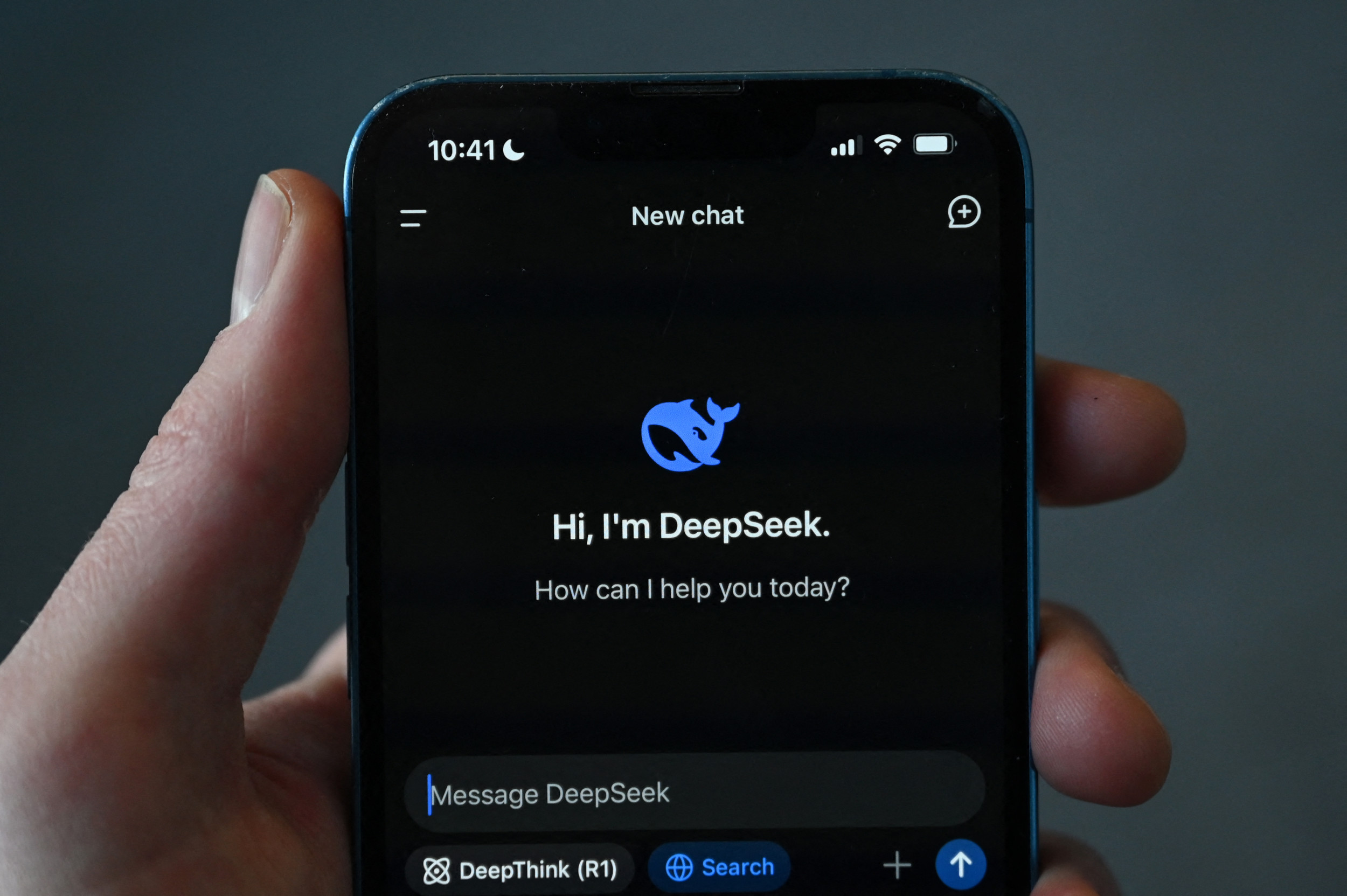
No, it wasn’t BYD, the 20-year-old automaker that got unexpected global recognition recently as it began to export low-price electric vehicles all over the world. (BYD built more electrical automobiles in 2024 than Tesla.) Today’s buzz was about DeepSeek, a Chinese startup that surprised techies when it launched a new open-source synthetic intelligence design with seemingly a fraction of the funding US rivals have actually hoovered up to construct their own. DeepSeek’s success saw US tech stocks slide earlier this week, and investors rush to reexamine their bets.

In some methods, professionals state, the start-up’s success follows the automobile industry’s playbook. And the lesson was similar: Chinese firms can still build it better and more inexpensively. “There is an underestimation of Chinese development and ingenuity,” says Ilaria Mazzocco, a senior fellow looking into Chinese policy at the nonprofit Center for Strategic and International Studies. “There is resourcefulness even when there may not be access to the best technology.”

Much of China’s significant international financial success stories have actually emerged out of a similar nationwide method, states Susan Helper, an economic expert with Case Western Reserve University who studies international supply chains and manufacturing and worked on EV policy in the Biden administration. Cars, photovoltaic panels, batteries, steel: “It’s essentially, choose an industry that’s vital, and put a lot of money towards it for a long time,” she states. (Compare that with the US technique to cars, “where we alter our minds on electric automobiles every few years.”)
When it comes to vehicles, the Chinese government has for nearly 2 decades subsidized electric-vehicle-makers, given tax breaks to electrical automobile clients, and created policies that require the whole country to reduce emissions and go electric-a push in the EV direction. Chinese AI financial investment is much more current, but growing bigger. In the previous decade, the Chinese government has put over $200 billion into AI-related companies, Stanford scientists approximate. Just this month, it announced a new $8.2 billion AI financial investment fund.
Additionally, Helper says, Chinese industry benefits from blurrier limits between the federal government, private companies, and the military.
The outcome is an AI environment that’s certainly not similar to the automobile one, however has a few echoes. The history of the Chinese auto industry demonstrates sophisticated research networks and firms’ capabilities to construct on the success of their predecessors, says Kyle Chan, a postdoctoral scientist at Princeton University who writes about Chinese industrial and climate policy. Witness the success of Geely, which started the late 1980s as a refrigerator parts business before transitioning to autos in 1997. For its first 4 years, it didn’t really have a license to run in China; today, it produces 3.3 million lorries and sells worldwide, in addition to owning major stakes in Volvo, Polestar, and Aston Martin. Geely and other car manufacturers that emerged in the same time frame-Chery, BYD, Great Wall Motor-have now produced a new age of makers. Today, about 100 domestic brand names are selling in China.
Similarly, research documents including DeepSeek employees reveal the start-up’s employees are also embedded in the very same networks as the bigger and more recognized Chinese tech giants that came previously, including ByteDance and Baidu. The start-up appears to have actually recruited youths from the same well-regarded, state-run universities, including Tsinghua University and Zhejiang University.
Chinese car manufacturers “developed on the foundation that was there before,” states Chan. Now, “DeepSeek is one of numerous startups that have actually emerged that benefited from an earlier generation of tech structure builders.” Because of that deepening bench of technology skill, Chan states, there is no that simply since DeepSeek seems to be winning Chinese AI right now means it’ll be winning next year, or even next month.
The major difference between the development of homegrown Chinese auto and AI industries, naturally, is speed. Automotive supply chains are worldwide and intricate, and developing them required marshaling not only new software, however likewise battery minerals, battery mineral processing capabilities, parts suppliers, and factories. So perhaps it is no surprise: It took Chinese companies many years to establish a domestic innovation that might give other nations a run for their cash. “This was a slow-moving train,” says Mazzocco.
Chinese big language designs, by contrast, have emerged really rapidly. “Everything is just compressed now. It’s taking place much quicker,” states Chan. The greatest lesson seems to be that, internationally, everybody should start focusing.
Comments
Join the WIRED community to include remarks.
X
More From WIRED