
Easywebsite
Add a review FollowOverview
-
Founded Date October 14, 1929
-
Sectors test
-
Posted Jobs 0
-
Viewed 76
Company Description
DeepSeek R1’s Implications: Winners and Losers in the Generative AI Value Chain
R1 is mainly open, on par with leading exclusive designs, appears to have been trained at considerably lower expense, and is more affordable to utilize in terms of API gain access to, all of which indicate an innovation that might change competitive characteristics in the field of Generative AI.
– IoT Analytics sees end users and AI applications service providers as the greatest winners of these current advancements, while exclusive model suppliers stand to lose the most, based on value chain analysis from the Generative AI Market Report 2025-2030 (published January 2025).
Why it matters
For suppliers to the generative AI worth chain: Players along the (generative) AI value chain may require to re-assess their value propositions and line up to a possible truth of low-cost, light-weight, open-weight models.
For generative AI adopters: DeepSeek R1 and other frontier models that may follow present lower-cost alternatives for AI adoption.
Background: DeepSeek’s R1 design rattles the markets
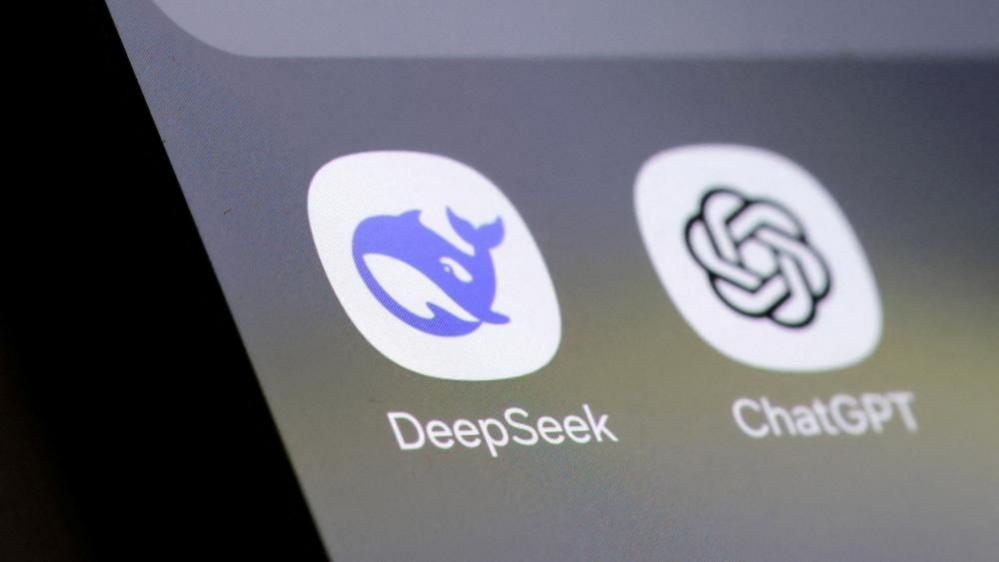
DeepSeek’s R1 design rocked the stock markets. On January 23, 2025, China-based AI startup DeepSeek launched its open-source R1 thinking generative AI (GenAI) model. News about R1 quickly spread out, and by the start of stock trading on January 27, 2025, the market cap for numerous significant innovation companies with large AI footprints had actually fallen dramatically ever since:
NVIDIA, a US-based chip designer and designer most known for its information center GPUs, dropped 18% in between the market close on January 24 and the marketplace close on February 3.
Microsoft, the leading hyperscaler in the cloud AI race with its Azure cloud services, dropped 7.5% (Jan 24-Feb 3).
Broadcom, a semiconductor company focusing on networking, broadband, and custom ASICs, dropped 11% (Jan 24-Feb 3).
Siemens Energy, a German energy technology supplier that supplies energy solutions for information center operators, dropped 17.8% (Jan 24-Feb 3).
Market participants, and specifically investors, responded to the narrative that the design that DeepSeek launched is on par with innovative designs, was allegedly trained on only a couple of countless GPUs, and is open source. However, since that preliminary sell-off, reports and analysis shed some light on the preliminary buzz.
The insights from this post are based on
Download a sample for more information about the report structure, select definitions, select market data, additional data points, and trends.
DeepSeek R1: What do we understand previously?
DeepSeek R1 is a cost-efficient, innovative thinking design that equals leading rivals while cultivating openness through publicly available weights.
DeepSeek R1 is on par with leading reasoning models. The biggest DeepSeek R1 model (with 685 billion parameters) performance is on par and even much better than a few of the leading designs by US foundation design suppliers. Benchmarks show that DeepSeek’s R1 design performs on par or much better than leading, more familiar designs like OpenAI’s o1 and Anthropic’s Claude 3.5 Sonnet.
DeepSeek was trained at a significantly lower cost-but not to the extent that preliminary news recommended. Initial reports showed that the training costs were over $5.5 million, but the true worth of not just training however developing the model overall has been disputed since its release. According to semiconductor research and consulting company SemiAnalysis, the $5.5 million figure is only one element of the expenses, neglecting hardware spending, the salaries of the research and development team, and other factors.
DeepSeek’s API pricing is over 90% cheaper than OpenAI’s. No matter the real expense to establish the model, DeepSeek is offering a much more affordable proposal for using its API: input and output tokens for DeepSeek R1 cost $0.55 per million and $2.19 per million, respectively, compared to OpenAI’s $15 per million and $60 per million for its o1 model.
DeepSeek R1 is an ingenious design. The associated clinical paper released by DeepSeekshows the methods used to develop R1 based upon V3: leveraging the mixture of professionals (MoE) architecture, support learning, and very imaginative hardware optimization to produce models requiring less resources to train and likewise fewer resources to carry out AI inference, resulting in its aforementioned API use costs.
DeepSeek is more open than most of its rivals. DeepSeek R1 is available for free on platforms like HuggingFace or GitHub. While DeepSeek has actually made its weights available and provided its training methodologies in its research study paper, the original training code and information have not been made available for a skilled individual to build an equivalent model, factors in specifying an open-source AI system according to the Open Source Initiative (OSI). Though DeepSeek has actually been more open than other GenAI companies, R1 remains in the open-weight classification when considering OSI requirements. However, the release stimulated interest in the open source neighborhood: Hugging Face has actually released an Open-R1 initiative on Github to create a full reproduction of R1 by building the “missing pieces of the R1 pipeline,” moving the design to fully open source so anybody can recreate and develop on top of it.
DeepSeek launched effective small designs alongside the significant R1 release. DeepSeek launched not just the major big design with more than 680 billion criteria however also-as of this article-6 distilled designs of DeepSeek R1. The designs range from 70B to 1.5 B, the latter fitting on lots of consumer-grade hardware. Since February 3, 2025, the designs were downloaded more than 1 million times on HuggingFace alone.
DeepSeek R1 was potentially trained on OpenAI’s data. On January 29, 2025, reports shared that Microsoft is investigating whether DeepSeek used OpenAI’s API to train its designs (an infraction of OpenAI’s regards to service)- though the hyperscaler also added R1 to its Azure AI Foundry service.
Understanding the generative AI value chain
GenAI spending benefits a broad industry worth chain. The graphic above, based upon research study for IoT Analytics’ Generative AI Market Report 2025-2030 (released January 2025), depicts key recipients of GenAI spending across the worth chain. Companies along the worth chain consist of:
Completion users – End users include customers and services that use a Generative AI application.
GenAI applications – Software suppliers that consist of GenAI features in their products or deal standalone GenAI software application. This includes enterprise software application business like Salesforce, with its focus on Agentic AI, and startups specifically focusing on GenAI applications like Perplexity or Lovable.
Tier 1 recipients – Providers of foundation models (e.g., OpenAI or Anthropic), design management platforms (e.g., AWS Sagemaker, Google Vertex or Microsoft Azure AI), information management tools (e.g., MongoDB or Snowflake), cloud computing and information center operations (e.g., Azure, AWS, Equinix or Digital Realty), AI experts and integration services (e.g., Accenture or Capgemini), and edge computing (e.g., Advantech or HPE).
Tier 2 beneficiaries – Those whose product or services regularly support tier 1 services, including companies of chips (e.g., NVIDIA or AMD), network and server devices (e.g., Arista Networks, Huawei or Belden), server cooling innovations (e.g., Vertiv or Schneider Electric).
Tier 3 beneficiaries – Those whose items and services routinely support tier 2 services, such as suppliers of electronic style automation software application service providers for chip design (e.g., Cadence or Synopsis), semiconductor fabrication (e.g., TSMC), heat exchangers for cooling innovations, and electrical grid innovation (e.g., Siemens Energy or ABB).
Tier 4 recipients and beyond – Companies that continue to support the tier above them, such as lithography systems (tier-4) essential for semiconductor fabrication machines (e.g., AMSL) or business that offer these suppliers (tier-5) with lithography optics (e.g., Zeiss).
Winners and losers along the generative AI value chain
The increase of models like DeepSeek R1 indicates a potential shift in the generative AI worth chain, challenging existing market dynamics and improving expectations for success and competitive advantage. If more models with comparable abilities emerge, certain players may benefit while others face increasing pressure.

Below, IoT Analytics examines the essential winners and setiathome.berkeley.edu likely losers based on the developments presented by DeepSeek R1 and the wider trend toward open, cost-effective models. This assessment considers the possible long-lasting impact of such models on the worth chain instead of the instant results of R1 alone.
Clear winners
End users
Why these developments are positive: The availability of more and cheaper designs will ultimately reduce expenses for the end-users and make AI more available.
Why these developments are unfavorable: No clear argument.
Our take: DeepSeek represents AI innovation that eventually benefits the end users of this innovation.
GenAI application suppliers
Why these developments are positive: Startups building applications on top of structure models will have more alternatives to select from as more models come online. As specified above, DeepSeek R1 is without a doubt less expensive than OpenAI’s o1 model, and though thinking designs are seldom used in an application context, it shows that ongoing developments and innovation enhance the designs and make them more affordable.
Why these developments are unfavorable: No clear argument.
Our take: The availability of more and more affordable designs will eventually decrease the expense of consisting of GenAI functions in applications.
Likely winners
Edge AI/edge calculating business
Why these developments are positive: During Microsoft’s current incomes call, Satya Nadella explained that “AI will be far more common,” as more work will run locally. The distilled smaller sized models that DeepSeek released along with the powerful R1 model are little sufficient to work on lots of edge devices. While little, the 1.5 B, 7B, and 14B designs are likewise comparably powerful thinking designs. They can fit on a laptop computer and other less powerful gadgets, e.g., IPCs and industrial entrances. These distilled designs have already been downloaded from Hugging Face numerous countless times.
Why these innovations are unfavorable: No clear argument.
Our take: The distilled designs of DeepSeek R1 that fit on less powerful hardware (70B and listed below) were downloaded more than 1 million times on HuggingFace alone. This reveals a strong interest in deploying models locally. Edge computing producers with edge AI options like Italy-based Eurotech, and Taiwan-based Advantech will stand to profit. Chip companies that focus on edge computing chips such as AMD, ARM, Qualcomm, and even Intel, might likewise benefit. Nvidia also runs in this market sector.
Note: IoT Analytics’ SPS 2024 Event Report (released in January 2025) looks into the current industrial edge AI trends, as seen at the SPS 2024 fair in Nuremberg, Germany.
Data management companies
Why these developments are favorable: There is no AI without information. To develop applications using open models, adopters will require a variety of information for training and during release, requiring correct information management.
Why these developments are unfavorable: No clear argument.
Our take: Data management is getting more crucial as the variety of different AI designs increases. Data management companies like MongoDB, Databricks and Snowflake along with the respective offerings from hyperscalers will stand to profit.
GenAI services suppliers
Why these innovations are favorable: The unexpected emergence of DeepSeek as a leading player in the (western) AI ecosystem shows that the complexity of GenAI will likely grow for some time. The greater availability of various models can cause more intricacy, driving more demand for services.
Why these developments are unfavorable: When leading models like DeepSeek R1 are available free of charge, the ease of experimentation and execution might limit the need for integration services.
Our take: As new innovations pertain to the market, GenAI services demand increases as business try to comprehend how to best utilize open designs for their organization.
Neutral
Cloud computing suppliers
Why these developments are positive: Cloud players rushed to consist of DeepSeek R1 in their model management platforms. Microsoft included it in their Azure AI Foundry, and AWS allowed it in Amazon Bedrock and Amazon Sagemaker. While the hyperscalers invest heavily in OpenAI and Anthropic (respectively), they are likewise model agnostic and allow hundreds of different designs to be hosted natively in their design zoos. Training and fine-tuning will continue to happen in the cloud. However, as designs end up being more efficient, less investment (capital expense) will be required, which will increase profit margins for hyperscalers.
Why these developments are unfavorable: More designs are expected to be deployed at the edge as the edge becomes more effective and designs more efficient. Inference is likely to move towards the edge going forward. The expense of training advanced models is likewise anticipated to decrease further.
Our take: Smaller, more efficient designs are becoming more vital. This reduces the need for powerful cloud computing both for training and reasoning which may be offset by greater overall demand and lower CAPEX requirements.
EDA Software companies
Why these innovations are positive: Demand for brand-new AI chip styles will increase as AI work end up being more specialized. EDA tools will be crucial for developing efficient, smaller-scale chips tailored for edge and dispersed AI inference
Why these developments are unfavorable: The approach smaller, less resource-intensive designs might reduce the need for developing innovative, high-complexity chips enhanced for huge data centers, potentially causing decreased licensing of EDA tools for high-performance GPUs and ASICs.
Our take: EDA software application service providers like Synopsys and Cadence might benefit in the long term as AI expertise grows and drives demand for new chip designs for edge, consumer, and low-cost AI work. However, the market might require to adjust to moving requirements, focusing less on big information center GPUs and more on smaller sized, effective AI hardware.
Likely losers

AI chip business
Why these innovations are favorable: The supposedly lower training expenses for designs like DeepSeek R1 could ultimately increase the total need for AI chips. Some described the Jevson paradox, the concept that efficiency causes more demand for a resource. As the training and reasoning of AI designs end up being more effective, the need could increase as higher effectiveness results in decrease expenses. ASML CEO Christophe Fouquet shared a similar line of thinking: “A lower cost of AI might mean more applications, more applications means more demand over time. We see that as an opportunity for more chips need.”
Why these innovations are unfavorable: The presumably lower costs for DeepSeek R1 are based mainly on the requirement for less cutting-edge GPUs for training. That puts some doubt on the sustainability of large-scale projects (such as the recently announced Stargate task) and the capital investment spending of tech companies mainly earmarked for purchasing AI chips.
Our take: IoT Analytics research for its latest Generative AI Market Report 2025-2030 (published January 2025) discovered that NVIDIA is leading the information center GPU market with a market share of 92%. NVIDIA’s monopoly identifies that market. However, that also reveals how strongly NVIDA’s faith is connected to the ongoing growth of costs on information center GPUs. If less hardware is needed to train and release models, then this might seriously compromise NVIDIA’s development story.
Other classifications connected to information centers (Networking equipment, electrical grid technologies, electrical power suppliers, and heat exchangers)
Like AI chips, designs are most likely to become less expensive to train and more effective to deploy, so the expectation for further data center infrastructure build-out (e.g., networking devices, cooling systems, and power supply services) would decrease appropriately. If fewer high-end GPUs are required, large-capacity data centers might downsize their investments in associated infrastructure, potentially impacting need for supporting technologies. This would put pressure on companies that provide critical parts, most especially networking hardware, power systems, and cooling options.
Clear losers

Proprietary model service providers
Why these innovations are positive: No clear argument.
Why these innovations are unfavorable: The GenAI business that have gathered billions of dollars of financing for their proprietary designs, such as OpenAI and Anthropic, stand to lose. Even if they develop and launch more open models, this would still cut into the revenue circulation as it stands today. Further, while some framed DeepSeek as a “side job of some quants” (quantitative experts), the release of DeepSeek’s powerful V3 and after that R1 designs proved far beyond that belief. The question going forward: What is the moat of proprietary model service providers if innovative designs like DeepSeek’s are getting launched for complimentary and end up being totally open and fine-tunable?
Our take: DeepSeek released effective designs for free (for regional deployment) or very inexpensive (their API is an order of magnitude more cost effective than comparable designs). Companies like OpenAI, Anthropic, and Cohere will deal with progressively strong competitors from players that and customizable innovative designs, like Meta and DeepSeek.
Analyst takeaway and outlook
The emergence of DeepSeek R1 enhances a key pattern in the GenAI space: open-weight, affordable models are becoming viable competitors to exclusive options. This shift challenges market assumptions and forces AI service providers to reconsider their value proposals.
1. End users and GenAI application suppliers are the most significant winners.
Cheaper, high-quality designs like R1 lower AI adoption expenses, benefiting both enterprises and consumers. Startups such as Perplexity and Lovable, which build applications on structure models, now have more options and can significantly lower API costs (e.g., R1’s API is over 90% cheaper than OpenAI’s o1 model).
2. Most professionals agree the stock market overreacted, but the development is genuine.
While major AI stocks dropped dramatically after R1’s release (e.g., NVIDIA and Microsoft down 18% and 7.5%, respectively), numerous experts see this as an overreaction. However, DeepSeek R1 does mark an authentic breakthrough in cost effectiveness and openness, setting a precedent for future competitors.
3. The recipe for building top-tier AI designs is open, accelerating competition.
DeepSeek R1 has actually proven that releasing open weights and a detailed approach is assisting success and caters to a growing open-source neighborhood. The AI landscape is continuing to shift from a few dominant exclusive players to a more competitive market where new entrants can construct on existing developments.
4. Proprietary AI service providers deal with increasing pressure.
Companies like OpenAI, Anthropic, and Cohere needs to now separate beyond raw model performance. What remains their competitive moat? Some might move towards enterprise-specific options, while others might explore hybrid service models.
5. AI facilities providers deal with combined potential customers.
Cloud computing providers like AWS and Microsoft Azure still gain from design training however face pressure as reasoning transfer to edge devices. Meanwhile, AI chipmakers like NVIDIA might see weaker need for high-end GPUs if more designs are trained with less resources.
6. The GenAI market remains on a strong growth path.
Despite disturbances, AI costs is anticipated to expand. According to IoT Analytics’ Generative AI Market Report 2025-2030, global spending on structure models and platforms is predicted to grow at a CAGR of 52% through 2030, driven by enterprise adoption and ongoing performance gains.
Final Thought:
DeepSeek R1 is not just a technical milestone-it signals a shift in the AI market’s economics. The dish for developing strong AI designs is now more commonly available, guaranteeing greater competitors and faster development. While exclusive models must adjust, AI application suppliers and end-users stand to benefit the majority of.
Disclosure
Companies discussed in this article-along with their products-are used as examples to display market developments. No business paid or received preferential treatment in this post, and it is at the discretion of the expert to select which examples are utilized. IoT Analytics makes efforts to vary the companies and products mentioned to help shine attention to the numerous IoT and related technology market players.
It deserves keeping in mind that IoT Analytics may have commercial relationships with some companies discussed in its articles, as some business certify IoT Analytics market research study. However, for privacy, IoT Analytics can not divulge private relationships. Please contact compliance@iot-analytics.com for any concerns or concerns on this front.
More details and further reading
Are you thinking about finding out more about Generative AI?
Generative AI Market Report 2025-2030
A 263-page report on the business Generative AI market, incl. market sizing & forecast, competitive landscape, end user adoption, trends, yewiki.org challenges, and more.
Download the sample to find out more about the report structure, choose meanings, choose information, extra information points, patterns, and more.
Already a customer? View your reports here →
Related posts
You may also be interested in the following articles:
AI 2024 in review: The 10 most noteworthy AI stories of the year
What CEOs discussed in Q4 2024: Tariffs, reshoring, and agentic AI
The industrial software application market landscape: 7 crucial stats entering into 2025
Who is winning the cloud AI race? Microsoft vs. AWS vs. Google
Related publications
You might also be interested in the following reports:
Industrial Software Landscape 2024-2030
Smart Factory Adoption Report 2024
Global Cloud Projects Report and Database 2024
Register for our newsletter and follow us on LinkedIn to remain current on the current patterns forming the IoT markets. For complete enterprise IoT protection with access to all of IoT Analytics’ paid content & reports, including dedicated analyst time, have a look at the Enterprise membership.