
Electropineida
Add a review FollowOverview
-
Founded Date October 7, 1973
-
Sectors test
-
Posted Jobs 0
-
Viewed 79
Company Description
II. what Is Artificial Intelligence?

1. With knowledge both ancient and brand-new (cf. Mt. 13:52), we are contacted us to assess the existing difficulties and chances positioned by clinical and technological improvements, particularly by the current advancement of Artificial Intelligence (AI). The Christian custom concerns the present of intelligence as an important element of how humans are produced “in the image of God” (Gen. 1:27). Beginning with an important vision of the human individual and the biblical calling to “till” and “keep” the earth (Gen. 2:15), the Church stresses that this gift of intelligence ought to be expressed through the responsible usage of factor and technical abilities in the stewardship of the created world.
2. The Church encourages the development of science, innovation, the arts, and other kinds of human undertaking, viewing them as part of the “cooperation of man and female with God in refining the visible creation.” [1] As Sirach verifies, God “gave skill to humans, that he may be glorified in his wonderful works” (Sir. 38:6). Human capabilities and creativity come from God and, when used appropriately, glorify God by showing his knowledge and goodness. Because of this, when we ask ourselves what it means to “be human,” we can not omit a factor to consider of our scientific and technological capabilities.
3. It is within this point of view that today Note addresses the anthropological and ethical challenges raised by AI-issues that are particularly significant, as one of the goals of this innovation is to mimic the human intelligence that created it. For example, unlike lots of other human creations, AI can be trained on the results of human imagination and then generate new “artifacts” with a level of speed and ability that frequently equals or exceeds what people can do, such as producing text or images indistinguishable from human compositions. This raises important concerns about AI‘s potential role in the growing crisis of truth in the general public forum. Moreover, this technology is developed to learn and make certain choices autonomously, adapting to brand-new scenarios and offering options not anticipated by its programmers, and hence, it raises essential concerns about ethical obligation and human safety, with wider ramifications for society as a whole. This new situation has actually triggered lots of people to review what it implies to be human and the function of humanity on the planet.
4. Taking all this into account, there is broad consensus that AI marks a new and significant stage in mankind’s engagement with technology, positioning it at the heart of what Pope Francis has actually explained as an “epochal modification.” [2] Its impact is felt internationally and in a large range of locations, consisting of social relationships, education, work, art, health care, law, warfare, and global relations. As AI advances rapidly toward even greater accomplishments, it is seriously essential to consider its anthropological and ethical implications. This involves not just mitigating dangers and avoiding harm but likewise making sure that its applications are utilized to promote human progress and the common good.
5. To contribute favorably to the discernment concerning AI, and in reaction to Pope Francis’ require a restored “knowledge of heart,” [3] the Church offers its experience through the anthropological and ethical reflections contained in this Note. Committed to its active function in the global discussion on these issues, the Church invites those delegated with sending the faith-including moms and dads, teachers, pastors, and bishops-to devote themselves to this crucial topic with care and attention. While this file is meant specifically for them, it is also suggested to be available to a broader audience, especially those who share the conviction that scientific and technological advances ought to be directed towards serving the human individual and the common good. [4]
6. To this end, the document begins by comparing ideas of intelligence in AI and in human intelligence. It then checks out the Christian understanding of human intelligence, providing a structure rooted in the Church’s philosophical and doctrinal custom. Finally, the file offers standards to make sure that the development and use of AI maintain human dignity and promote the important advancement of the human person and society.
7. The idea of “intelligence” in AI has actually developed gradually, making use of a variety of concepts from different disciplines. While its origins extend back centuries, a significant turning point happened in 1956 when the American computer system scientist John McCarthy arranged a summertime workshop at Dartmouth University to explore the issue of “Artificial Intelligence,” which he defined as “that of making a device behave in ways that would be called smart if a human were so acting.” [5] This workshop released a research study program concentrated on creating makers capable of performing tasks typically connected with the human intellect and smart behavior.
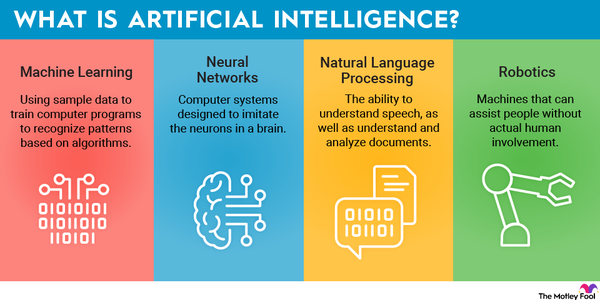
8. Since then, AI research has advanced quickly, causing the advancement of complex systems capable of performing extremely advanced jobs. [6] These so-called “narrow AI” systems are normally created to manage specific and limited functions, such as equating languages, forecasting the trajectory of a storm, categorizing images, answering questions, or generating visual material at the user’s demand. While the meaning of “intelligence” in AI research study varies, many contemporary AI systems-particularly those utilizing machine learning-rely on statistical inference instead of sensible deduction. By analyzing big datasets to identify patterns, AI can “anticipate” [7] outcomes and propose new methods, simulating some cognitive processes normal of human analytical. Such achievements have been enabled through advances in computing technology (including neural networks, without supervision artificial intelligence, and evolutionary algorithms) as well as hardware innovations (such as specialized processors). Together, these technologies allow AI systems to react to various kinds of human input, adapt to new situations, and even recommend unique options not anticipated by their original programmers. [8]
9. Due to these fast developments, lots of jobs as soon as handled solely by human beings are now delegated to AI. These systems can augment or even supersede what humans are able to do in lots of fields, especially in specialized areas such as data analysis, image recognition, and medical diagnosis. While each “narrow AI” application is created for a particular job, numerous scientists aim to develop what is called “Artificial General Intelligence” (AGI)-a single system efficient in operating across all cognitive domains and carrying out any task within the scope of human intelligence. Some even argue that AGI could one day attain the state of “superintelligence,” going beyond human intellectual capacities, or add to “super-longevity” through advances in biotechnology. Others, nevertheless, fear that these possibilities, even if theoretical, could one day eclipse the human person, while still others welcome this possible change. [9]
10. Underlying this and many other perspectives on the subject is the implicit presumption that the term “intelligence” can be used in the very same way to refer to both human intelligence and AI. Yet, this does not record the complete scope of the idea. When it comes to people, intelligence is a faculty that pertains to the person in his/her whole, whereas in the context of AI, “intelligence” is understood functionally, frequently with the presumption that the activities quality of the human mind can be broken down into digitized actions that devices can duplicate. [10]
11. This functional perspective is exhibited by the “Turing Test,” which considers a machine “smart” if an individual can not identify its behavior oke.zone from that of a human. [11] However, in this context, the term “habits” refers just to the performance of specific intellectual jobs; it does not represent the full breadth of human experience, which includes abstraction, feelings, creativity, and the aesthetic, moral, and religious sensibilities. Nor does it encompass the full variety of expressions particular of the human mind. Instead, when it comes to AI, the “intelligence” of a system is examined methodologically, however likewise reductively, based on its ability to produce appropriate responses-in this case, those associated with the human intellect-regardless of how those reactions are generated.
12. AI‘s sophisticated functions provide it sophisticated abilities to perform tasks, however not the ability to think. [12] This difference is most importantly essential, as the method “intelligence” is specified inevitably forms how we comprehend the relationship between human idea and this technology. [13] To value this, one should remember the richness of the philosophical tradition and Christian faith, which use a much deeper and more detailed understanding of intelligence-an understanding that is main to the Church’s teaching on the nature, dignity, and occupation of the human person. [14]
13. From the dawn of human self-reflection, the mind has actually played a main function in understanding what it means to be “human.” Aristotle observed that “all individuals by nature desire to know.” [15] This understanding, with its capability for abstraction that comprehends the nature and significance of things, sets humans apart from the animal world. [16] As thinkers, theologians, and psychologists have actually taken a look at the precise nature of this intellectual professors, they have likewise explored how people comprehend the world and their distinct place within it. Through this expedition, the Christian custom has actually pertained to understand the human individual as a being consisting of both body and soul-deeply linked to this world and yet transcending it. [17]
14. In the classical tradition, the concept of intelligence is typically understood through the complementary principles of “reason” (ratio) and “intellect” (intellectus). These are not different faculties however, as Saint Thomas Aquinas explains, they are two modes in which the very same intelligence operates: “The term intelligence is inferred from the inward grasp of the fact, while the name reason is drawn from the analytical and discursive procedure.” [18] This succinct description highlights the two basic and complementary dimensions of human intelligence. Intellectus refers to the intuitive grasp of the truth-that is, nabbing it with the “eyes” of the mind-which precedes and grounds argumentation itself. Ratio pertains to reasoning correct: the discursive, analytical procedure that causes judgment. Together, intelligence and reason form the 2 elements of the act of intelligere, “the correct operation of the human being as such.” [19]
15. Explaining the human person as a “reasonable” being does not reduce the individual to a specific mode of idea; rather, it acknowledges that the capability for intellectual understanding shapes and penetrates all aspects of human activity. [20] Whether exercised well or poorly, this capacity is an intrinsic element of humanity. In this sense, the “term ‘logical’ includes all the capacities of the human person,” including those related to “understanding and comprehending, as well as those of prepared, loving, choosing, and wanting; it also consists of all corporeal functions carefully related to these abilities.” [21] This detailed point of view highlights how, in the human individual, developed in the “picture of God,” factor is incorporated in such a way that raises, shapes, and changes both the person’s will and actions. [22]
16. Christian thought considers the intellectual professors of the human individual within the framework of an integral sociology that sees the human being as essentially embodied. In the human person, spirit and matter “are not two natures joined, however rather their union forms a single nature.” [23] In other words, the soul is not simply the immaterial “part” of the individual contained within the body, nor is the body an external shell real estate an intangible “core.” Rather, the whole human person is all at once both material and spiritual. This understanding reflects the mentor of Sacred Scripture, which views the human person as a being who lives out relationships with God and others (and hence, vetlek.ru an authentically spiritual dimension) within and through this embodied presence. [24] The profound significance of this condition is further brightened by the mystery of the Incarnation, through which God himself took on our flesh and “raised it approximately a sublime dignity.” [25]
17. Although deeply rooted in physical existence, the human person goes beyond the material world through the soul, which is “practically on the horizon of eternity and time.” [26] The intelligence’s capacity for transcendence and the self-possessed liberty of the will come from the soul, by which the human person “shares in the light of the divine mind.” [27] Nevertheless, the human spirit does not exercise its normal mode of understanding without the body. [28] In this way, the intellectual faculties of the human individual are an essential part of an anthropology that recognizes that the human individual is a “unity of body and soul.” [29] Further aspects of this understanding will be developed in what follows.
18. Humans are “ordered by their very nature to social communion,” [30] possessing the capability to understand one another, to give themselves in love, and to get in into communion with others. Accordingly, human intelligence is not an isolated faculty but is exercised in relationships, finding its max expression in dialogue, collaboration, and uniformity. We find out with others, and we learn through others.
19. The relational orientation of the human individual is ultimately grounded in the eternal self-giving of the Triune God, whose love is exposed in creation and redemption. [31] The human person is “contacted us to share, by knowledge and love, in God’s own life.” [32]
20. This vocation to communion with God is necessarily tied to the call to communion with others. Love of God can not be separated from love for one’s neighbor (cf. 1 Jn. 4:20; Mt. 22:37 -39). By the grace of sharing God’s life, Christians are likewise contacted us to imitate Christ’s outpouring present (cf. 2 Cor. 9:8 -11; Eph. 5:1 -2) by following his command to “like one another, as I have actually enjoyed you” (Jn. 13:34). [33] Love and service, echoing the divine life of self-giving, transcend self-interest to respond more fully to the human vocation (cf. 1 Jn. 2:9). A lot more superb than knowing numerous things is the commitment to care for one another, for if “I understand all mysteries and all understanding […] but do not have love, I am absolutely nothing” (1 Cor. 13:2).
21. Human intelligence is ultimately “God’s present fashioned for the assimilation of fact.” [34] In the double sense of intellectus-ratio, it makes it possible for the person to explore realities that go beyond mere sensory experience or energy, given that “the desire for fact is part of humanity itself. It is an inherent home of human factor to ask why things are as they are.” [35] Moving beyond the limitations of empirical data, human intelligence can “with authentic certitude attain to reality itself as knowable.” [36] While truth remains only partially known, the desire for fact “spurs factor always to go further; certainly, it is as if factor were overwhelmed to see that it can always surpass what it has already attained.” [37] Although Truth in itself goes beyond the borders of human intelligence, it irresistibly attracts it. [38] Drawn by this tourist attraction, the human individual is caused look for “realities of a higher order.” [39]
22. This natural drive towards the pursuit of fact is particularly obvious in the distinctly human capacities for semantic understanding and imagination, [40] through which this search unfolds in a “manner that is suitable to the social nature and self-respect of the human individual.” [41] Likewise, an unfaltering orientation to the truth is important for charity to be both authentic and universal. [42]
23. The look for reality discovers its highest expression in openness to realities that go beyond the physical and produced world. In God, all realities attain their supreme and original meaning. [43] Entrusting oneself to God is a “fundamental decision that engages the entire individual.” [44] In this way, the human individual becomes fully what he or she is contacted us to be: “the intelligence and the will show their spiritual nature,” allowing the individual “to act in a way that recognizes personal flexibility to the complete.” [45]
24. The Christian faith comprehends creation as the complimentary act of the Triune God, who, as Saint Bonaventure of Bagnoregio explains, produces “not to increase his glory, but to show it forth and to interact it.” [46] Since God creates according to his Wisdom (cf. Wis. 9:9; Jer. 10:12), production is imbued with an intrinsic order that shows God’s plan (cf. Gen. 1; Dan. 2:21 -22; Is. 45:18; Ps. 74:12 -17; 104), [47] within which God has called people to presume a special role: to cultivate and take care of the world. [48]
25. Shaped by the Divine Craftsman, human beings live out their identity as beings made in imago Dei by “keeping” and “tilling” (cf. Gen. 2:15) creation-using their intelligence and skills to care for and establish creation in accord with God’s strategy. [49] In this, human intelligence reflects the Divine Intelligence that created all things (cf. Gen. 1-2; Jn. 1), [50] continuously sustains them, and guides them to their supreme purpose in him. [51] Moreover, humans are contacted us to develop their abilities in science and innovation, for through them, God is glorified (cf. Sir. 38:6). Thus, in a correct relationship with production, human beings, on the one hand, utilize their intelligence and skill to cooperate with God in guiding development toward the purpose to which he has actually called it. [52] On the other hand, creation itself, as Saint Bonaventure observes, helps the human mind to “rise slowly to the supreme Principle, who is God.” [53]
26. In this context, human intelligence ends up being more plainly understood as a faculty that forms an essential part of how the whole individual engages with reality. Authentic engagement requires embracing the complete scope of one’s being: spiritual, cognitive, embodied, and relational.
27. This engagement with truth unfolds in different ways, as each person, in his/her diverse uniqueness [54], looks for to understand the world, associate with others, fix issues, express creativity, and pursue essential well-being through the harmonious interplay of the different measurements of the person’s intelligence. [55] This involves sensible and linguistic abilities however can also encompass other modes of connecting with reality. Consider the work of a craftsmen, who “must know how to recognize, in inert matter, a specific kind that others can not acknowledge” [56] and bring it forth through insight and useful ability. Indigenous peoples who live close to the earth typically possess a profound sense of nature and its cycles. [57] Similarly, a buddy who knows the best word to state or an individual skilled at handling human relationships exhibits an intelligence that is “the fruit of self-examination, discussion and generous encounter in between individuals.” [58] As Pope Francis observes, “in this age of synthetic intelligence, we can not forget that poetry and love are essential to conserve our humankind.” [59]
28. At the heart of the Christian understanding of intelligence is the combination of truth into the ethical and spiritual life of the individual, guiding his or her actions in light of God’s goodness and truth. According to God’s strategy, intelligence, in its max sense, likewise consists of the ability to enjoy what holds true, great, and gorgeous. As the twentieth-century French poet Paul Claudel revealed, “intelligence is absolutely nothing without pleasure.” [60] Similarly, Dante, upon reaching the highest heaven in Paradiso, affirms that the conclusion of this intellectual delight is discovered in the “light intellectual full of love, love of real excellent filled with pleasure, pleasure which transcends every sweet taste.” [61]
29. A correct understanding of human intelligence, therefore, can not be decreased to the simple acquisition of realities or the ability to perform specific tasks. Instead, it involves the individual’s openness to the supreme questions of life and reflects an orientation towards the True and the Good. [62] As an expression of the divine image within the individual, human intelligence has the ability to access the totality of being, pondering presence in its fullness, which goes beyond what is measurable, and grasping the meaning of what has actually been understood. For believers, this capacity consists of, in a specific method, the ability to grow in the knowledge of the secrets of God by utilizing reason to engage ever more profoundly with exposed realities (intellectus fidei). [63] True intelligence is formed by divine love, which “is poured forth in our hearts by the Holy Spirit” (Rom. 5:5). From this, it follows that human intelligence has an important reflective dimension, an unselfish openness to the True, the Good, and the Beautiful, beyond any practical function.
30. Because of the foregoing conversation, the distinctions between human intelligence and present AI systems become obvious. While AI is an extraordinary technological achievement efficient in imitating certain outputs related to human intelligence, it runs by carrying out jobs, attaining objectives, or making choices based upon quantitative information and computational logic. For instance, with its analytical power, AI stands out at integrating information from a range of fields, modeling complex systems, and fostering interdisciplinary connections. In this way, it can help experts team up in solving complex issues that “can not be handled from a single perspective or from a single set of interests.” [64]
31. However, even as AI procedures and simulates certain expressions of intelligence, it remains essentially restricted to a logical-mathematical framework, which imposes fundamental constraints. Human intelligence, on the other hand, develops naturally throughout the individual’s physical and mental development, shaped by a myriad of lived experiences in the flesh. Although sophisticated AI systems can “find out” through procedures such as artificial intelligence, this sort of training is fundamentally different from the developmental development of human intelligence, which is shaped by embodied experiences, consisting of sensory input, emotional actions, social interactions, and the unique context of each moment. These components shape and form individuals within their individual history.In contrast, AI, lacking a physique, relies on computational thinking and learning based upon vast datasets that consist of recorded human experiences and knowledge.
32. Consequently, although AI can simulate aspects of human reasoning and perform specific jobs with incredible speed and performance, its computational capabilities represent only a fraction of the wider capabilities of the human mind. For instance, AI can not presently duplicate ethical discernment or the capability to develop genuine relationships. Moreover, human intelligence is located within a personally lived history of intellectual and moral formation that essentially forms the individual’s perspective, incorporating the physical, psychological, social, ethical, and spiritual dimensions of life. Since AI can not provide this fullness of understanding, approaches that rely solely on this technology or treat it as the main methods of translating the world can cause “a loss of gratitude for the entire, for the relationships in between things, and for the wider horizon.” [65]
33. Human intelligence is not mainly about finishing practical tasks however about understanding and actively engaging with truth in all its dimensions; it is likewise efficient in unexpected insights. Since AI lacks the richness of corporeality, relationality, and the openness of the human heart to fact and goodness, its capacities-though relatively limitless-are unparalleled with the human ability to understand reality. A lot can be gained from a health problem, a welcome of reconciliation, and even a basic sunset; certainly, lots of experiences we have as humans open new horizons and use the possibility of attaining new wisdom. No gadget, working entirely with data, can measure up to these and numerous other experiences present in our lives.
34. Drawing an excessively close equivalence in between human intelligence and AI risks yielding to a functionalist viewpoint, where individuals are valued based on the work they can perform. However, an individual’s worth does not depend upon having specific abilities, cognitive and technological achievements, or private success, but on the individual’s inherent self-respect, grounded in being developed in the image of God. [66] This self-respect remains intact in all situations, consisting of for those unable to exercise their capabilities, whether it be an unborn kid, an unconscious individual, or an older individual who is suffering. [67] It likewise underpins the tradition of human rights (and, in specific, what are now called “neuro-rights”), which represent “an important point of merging in the look for typical ground” [68] and can, hence, work as an essential ethical guide in conversations on the responsible development and usage of AI.
35. Considering all these points, as Pope Francis observes, “the very use of the word ‘intelligence'” in connection with AI “can show misleading” [69] and threats ignoring what is most valuable in the human individual. Because of this, AI should not be seen as a synthetic kind of human intelligence however as a product of it. [70]
36. Given these considerations, one can ask how AI can be comprehended within God’s plan. To address this, it is essential to recall that techno-scientific activity is not neutral in character but is a human endeavor that engages the humanistic and cultural dimensions of human creativity. [71]
37. Seen as a fruit of the possible engraved within human intelligence, [72] clinical inquiry and the advancement of technical abilities are part of the “partnership of males and female with God in refining the noticeable creation.” [73] At the exact same time, all scientific and technological accomplishments are, ultimately, gifts from God. [74] Therefore, humans must always use their abilities in view of the greater purpose for which God has actually approved them. [75]
38. We can gratefully acknowledge how technology has actually “corrected countless evils which used to damage and limit human beings,” [76] a truth for which we must rejoice. Nevertheless, not all technological advancements in themselves represent real human development. [77] The Church is especially opposed to those applications that threaten the sanctity of life or the self-respect of the human individual. [78] Like any human venture, technological advancement should be directed to serve the human person and add to the pursuit of “greater justice, more comprehensive fraternity, and a more gentle order of social relations,” which are “more important than advances in the technical field.” [79] Concerns about the ethical implications of technological development are shared not just within the Church but likewise among lots of scientists, technologists, and professional associations, who increasingly require ethical reflection to direct this advancement in a responsible method.
39. To deal with these challenges, it is important to stress the significance of moral responsibility grounded in the self-respect and occupation of the human individual. This guiding concept also uses to questions concerning AI. In this context, the ethical measurement takes on main importance due to the fact that it is people who create systems and identify the purposes for which they are used. [80] Between a machine and a human being, just the latter is genuinely an ethical agent-a topic of moral duty who works out flexibility in his/her decisions and accepts their effects. [81] It is not the device however the human who remains in relationship with truth and goodness, directed by an ethical conscience that calls the person “to love and to do what is excellent and to prevent wicked,” [82] attesting to “the authority of fact in recommendation to the supreme Good to which the human person is drawn.” [83] Likewise, in between a maker and a human, only the human can be sufficiently self-aware to the point of listening and following the voice of conscience, discerning with vigilance, and seeking the excellent that is possible in every situation. [84] In fact, all of this likewise comes from the individual’s workout of intelligence.
40. Like any product of human creativity, AI can be directed toward positive or unfavorable ends. [85] When used in ways that appreciate human dignity and promote the wellness of individuals and communities, it can contribute favorably to the human occupation. Yet, as in all locations where humans are contacted us to make choices, the shadow of evil also looms here. Where human liberty permits the possibility of selecting what is incorrect, the moral assessment of this technology will require to take into account how it is directed and utilized.
41. At the same time, it is not only completions that are fairly significant but also the methods utilized to attain them. Additionally, the total vision and understanding of the human person ingrained within these systems are very important to consider also. Technological items show the worldview of their designers, owners, users, and regulators, [86] and have the power to “form the world and engage consciences on the level of worths.” [87] On a societal level, some technological developments could also strengthen relationships and power characteristics that are inconsistent with a correct understanding of the human individual and society.
42. Therefore, completions and the ways utilized in an offered application of AI, along with the general vision it includes, must all be examined to ensure they appreciate human self-respect and promote the common good. [88] As Pope Francis has actually mentioned, “the intrinsic self-respect of every guy and every lady” must be “the crucial criterion in examining emerging technologies; these will show fairly sound to the degree that they help respect that dignity and increase its expression at every level of human life,” [89] consisting of in the social and financial spheres. In this sense, human intelligence plays a crucial function not only in creating and producing technology but also in directing its use in line with the genuine good of the human individual. [90] The responsibility for managing this sensibly pertains to every level of society, assisted by the principle of subsidiarity and other concepts of Catholic Social Teaching.
43. The dedication to making sure that AI constantly supports and promotes the supreme worth of the self-respect of every human and the fullness of the human occupation works as a requirement of discernment for designers, owners, operators, and regulators of AI, in addition to to its users. It remains valid for each application of the innovation at every level of its use.
44. An assessment of the ramifications of this guiding principle might start by thinking about the value of ethical responsibility. Since complete moral causality belongs just to personal agents, not artificial ones, it is essential to be able to determine and define who bears duty for the procedures associated with AI, especially those efficient in learning, correction, and reprogramming. While bottom-up techniques and really deep neural networks enable AI to fix complicated problems, they make it challenging to comprehend the processes that cause the options they embraced. This complicates accountability since if an AI application produces unwanted outcomes, identifying who is responsible becomes tough. To resolve this issue, attention requires to be provided to the nature of accountability processes in complex, extremely automated settings, where results might only become obvious in the medium to long term. For this, it is essential that supreme responsibility for decisions made utilizing AI rests with the human decision-makers and that there is accountability for making use of AI at each phase of the decision-making process. [91]
45. In addition to determining who is accountable, it is vital to recognize the goals provided to AI systems. Although these systems may use unsupervised autonomous learning mechanisms and often follow courses that human beings can not rebuild, they ultimately pursue goals that humans have assigned to them and are governed by procedures developed by their designers and programmers. Yet, this provides a challenge because, as AI designs end up being increasingly capable of independent learning, the capability to maintain control over them to guarantee that such applications serve human purposes might successfully lessen. This raises the vital concern of how to make sure that AI systems are purchased for the good of people and not against them.
46. While responsibility for the ethical usage of AI systems begins with those who establish, produce, manage, and manage such systems, it is also shared by those who utilize them. As Pope Francis noted, the machine “makes a technical option amongst several possibilities based either on distinct criteria or on analytical inferences. People, nevertheless, not only select, however in their hearts can deciding.” [92] Those who use AI to achieve a task and follow its outcomes develop a context in which they are eventually accountable for the power they have actually handed over. Therefore, insofar as AI can help human beings in making decisions, the algorithms that govern it should be reliable, secure, robust enough to deal with disparities, and transparent in their operation to reduce predispositions and unintentional adverse effects. [93] Regulatory frameworks ought to make sure that all legal entities remain responsible for the use of AI and all its repercussions, with appropriate safeguards for openness, personal privacy, and responsibility. [94] Moreover, those utilizing AI must be cautious not to end up being overly reliant on it for their decision-making, a trend that increases contemporary society’s already high dependence on innovation.
47. The Church’s ethical and social mentor supplies resources to help ensure that AI is used in a method that maintains human firm. Considerations about justice, for example, need to also deal with problems such as promoting simply social characteristics, maintaining international security, and promoting peace. By exercising vigilance, people and neighborhoods can discern methods to use AI to benefit humanity while preventing applications that could break down human self-respect or damage the environment. In this context, the principle of obligation need to be understood not only in its most limited sense however as a “responsibility for the look after others, which is more than simply representing results attained.” [95]
48. Therefore, AI, like any technology, can be part of a mindful and accountable answer to humankind’s vocation to the excellent. However, as previously talked about, AI must be directed by human intelligence to line up with this vocation, ensuring it respects the dignity of the human person. Recognizing this “exalted dignity,” the Second Vatican Council affirmed that “the social order and its advancement need to usually work to the benefit of the human individual.” [96] In light of this, using AI, as Pope Francis said, must be “accompanied by an ethic motivated by a vision of the typical good, a principles of liberty, obligation, and fraternity, efficient in cultivating the full development of individuals in relation to others and to the whole of production.” [97]
49. Within this basic viewpoint, some observations follow below to show how the preceding arguments can help supply an ethical orientation in practical circumstances, in line with the “knowledge of heart” that Pope Francis has proposed. [98] While not exhaustive, this discussion is offered in service of the dialogue that thinks about how AI can be utilized to maintain the self-respect of the human person and promote the typical good. [99]
50. As Pope Francis observed, “the inherent self-respect of each person and the fraternity that binds us together as members of the one human family must undergird the development of new technologies and act as unassailable criteria for evaluating them before they are used.” [100]
51. Viewed through this lens, AI could “present important developments in agriculture, education and culture, an improved level of life for whole nations and individuals, and the development of human fraternity and social relationship,” and hence be “used to promote integral human development.” [101] AI might also assist companies recognize those in need and counter discrimination and marginalization. These and other comparable applications of this innovation could contribute to human advancement and the typical good. [102]
52. However, library.kemu.ac.ke while AI holds lots of possibilities for promoting the great, it can likewise impede or even counter human advancement and the typical good. Pope Francis has kept in mind that “evidence to date recommends that digital innovations have increased inequality in our world. Not just differences in product wealth, which are also substantial, but also distinctions in access to political and social impact.” [103] In this sense, AI could be used to perpetuate marginalization and discrimination, create new kinds of poverty, broaden the “digital divide,” and get worse existing social inequalities. [104]
53. Moreover, the concentration of the power over mainstream AI applications in the hands of a few effective companies raises significant ethical issues. Exacerbating this issue is the fundamental nature of AI systems, where no single individual can work out total oversight over the huge and complex datasets used for computation. This absence of distinct accountability creates the threat that AI might be manipulated for individual or corporate gain or to direct public viewpoint for the benefit of a specific market. Such entities, motivated by their own interests, possess the capacity to work out “kinds of control as subtle as they are intrusive, creating systems for the adjustment of consciences and of the democratic procedure.” [105]
54. Furthermore, there is the threat of AI being utilized to promote what Pope Francis has called the “technocratic paradigm,” which views all the world’s problems as understandable through technological methods alone. [106] In this paradigm, human dignity and fraternity are typically reserved in the name of efficiency, “as if truth, goodness, and reality automatically stream from technological and financial power as such.” [107] Yet, human self-respect and the common excellent needs to never ever be breached for the sake of efficiency, [108] for “technological advancements that do not result in an enhancement in the lifestyle of all mankind, but on the contrary, exacerbate inequalities and disputes, can never ever count as true progress. ” [109] Instead, AI should be put “at the service of another kind of development, one which is healthier, more human, more social, more important.” [110]
55. Attaining this objective needs a deeper reflection on the relationship in between autonomy and obligation. Greater autonomy heightens each person’s responsibility throughout different elements of common life. For Christians, the structure of this duty depends on the recognition that all human capabilities, including the person’s autonomy, originated from God and are meant to be utilized in the service of others. [111] Therefore, instead of simply pursuing financial or technological goals, AI needs to serve “the common good of the entire human household,” which is “the sum total of social conditions that enable individuals, either as groups or as individuals, to reach their satisfaction more totally and more quickly.” [112]
56. The Second Vatican Council observed that “by his innermost nature guy is a social being; and if he does not enter into relations with others, he can neither live nor develop his presents.” [113] This conviction highlights that living in society is intrinsic to the nature and vocation of the human individual. [114] As social beings, we look for relationships that include mutual exchange and the pursuit of fact, in the course of which, individuals “share with each other the fact they have actually found, or think they have actually discovered, in such a way that they help one another in the look for fact.” [115]
57. Such a mission, along with other elements of human communication, presupposes encounters and mutual exchange in between individuals shaped by their special histories, ideas, convictions, and relationships. Nor can we forget that human intelligence is a varied, multifaceted, and intricate reality: specific and social, logical and affective, conceptual and symbolic. Pope Francis highlights this dynamic, noting that “together, we can seek the fact in dialogue, in unwinded discussion or in passionate dispute. To do so calls for determination; it entails moments of silence and suffering, yet it can patiently embrace the broader experience of people and individuals. […] The procedure of building fraternity, be it regional or universal, can only be carried out by spirits that are free and available to authentic encounters.” [116]
58. It remains in this context that one can consider the difficulties AI positions to human relationships. Like other technological tools, AI has the prospective to foster connections within the human household. However, it could likewise prevent a true encounter with reality and, ultimately, lead individuals to “a deep and melancholic dissatisfaction with interpersonal relations, or a hazardous sense of isolation.” [117] Authentic human relationships require the richness of being with others in their pain, their pleas, and their pleasure. [118] Since human intelligence is expressed and improved also in interpersonal and embodied ways, authentic and spontaneous encounters with others are indispensable for engaging with reality in its fullness.
59. Because “real knowledge requires an encounter with reality,” [119] the rise of AI introduces another difficulty. Since AI can effectively imitate the products of human intelligence, the ability to know when one is connecting with a human or a machine can no longer be taken for granted. Generative AI can produce text, speech, images, and other sophisticated outputs that are generally associated with people. Yet, it should be understood for what it is: a tool, not a person. [120] This difference is typically obscured by the language used by specialists, which tends to anthropomorphize AI and therefore blurs the line between human and machine.
60. Anthropomorphizing AI likewise poses specific challenges for the advancement of children, potentially motivating them to develop patterns of interaction that treat human relationships in a transactional way, as one would connect to a chatbot. Such routines could lead young individuals to see instructors as mere dispensers of details instead of as coaches who direct and support their intellectual and ethical growth. Genuine relationships, rooted in compassion and an unfaltering commitment to the good of the other, are necessary and irreplaceable in fostering the full development of the human individual.
61. In this context, it is essential to clarify that, regardless of using anthropomorphic language, no AI application can really experience compassion. Emotions can not be reduced to facial expressions or expressions created in reaction to prompts; they show the method an individual, as an entire, connects to the world and to his or her own life, with the body playing a main role. True empathy requires the capability to listen, acknowledge another’s irreducible uniqueness, welcome their otherness, and grasp the significance behind even their silences. [121] Unlike the world of analytical judgment in which AI stands out, real empathy belongs to the relational sphere. It includes intuiting and collaring the lived experiences of another while maintaining the distinction in between self and other. [122] While AI can simulate empathetic reactions, it can not duplicate the eminently individual and relational nature of genuine compassion. [123]
62. In light of the above, it is clear why misrepresenting AI as an individual ought to always be avoided; doing so for deceptive purposes is a severe ethical infraction that could deteriorate social trust. Similarly, utilizing AI to trick in other contexts-such as in education or in human relationships, including the sphere of sexuality-is also to be thought about unethical and requires cautious oversight to avoid damage, maintain openness, and ensure the dignity of all individuals. [124]
63. In a progressively separated world, some individuals have actually turned to AI in search of deep human relationships, easy companionship, or perhaps psychological bonds. However, while humans are implied to experience genuine relationships, AI can just simulate them. Nevertheless, such relationships with others are an essential part of how a person grows to become who she or he is meant to be. If AI is utilized to assist individuals foster authentic connections in between individuals, it can contribute favorably to the complete awareness of the individual. Conversely, if we replace relationships with God and with others with interactions with innovation, we run the risk of replacing authentic relationality with a lifeless image (cf. Ps. 106:20; Rom. 1:22 -23). Instead of retreating into artificial worlds, we are called to engage in a committed and intentional way with truth, especially by recognizing with the bad and suffering, consoling those in grief, and creating bonds of communion with all.
64. Due to its interdisciplinary nature, AI is being increasingly incorporated into economic and monetary systems. Significant financial investments are presently being made not just in the innovation sector however also in energy, financing, and media, especially in the areas of marketing and sales, logistics, technological innovation, compliance, and risk management. At the very same time, AI’s applications in these areas have also highlighted its ambivalent nature, as a source of tremendous chances but also profound dangers. A very first genuine crucial point in this location concerns the possibility that-due to the concentration of AI applications in the hands of a few corporations-only those big business would gain from the value produced by AI instead of the businesses that utilize it.
65. Other more comprehensive aspects of AI’s influence on the economic-financial sphere must likewise be carefully analyzed, especially concerning the interaction in between concrete reality and the digital world. One essential factor to consider in this regard involves the coexistence of diverse and alternative forms of financial and monetary institutions within an offered context. This factor must be motivated, as it can bring advantages in how it supports the genuine economy by cultivating its advancement and stability, specifically throughout times of crisis. Nevertheless, it must be stressed that digital truths, not limited by any spatial bonds, tend to be more homogeneous and impersonal than neighborhoods rooted in a specific location and a specific history, with a common journey defined by shared worths and hopes, however also by unavoidable arguments and . This diversity is an undeniable possession to a community’s economic life. Turning over the economy and finance completely to digital technology would minimize this range and richness. As an outcome, many services to financial problems that can be reached through natural dialogue between the involved celebrations might no longer be attainable in a world dominated by treatments and just the look of proximity.
66. Another location where AI is already having an extensive effect is the world of work. As in many other fields, AI is driving essential improvements throughout numerous professions, with a variety of effects. On the one hand, it has the prospective to boost knowledge and productivity, develop brand-new tasks, enable workers to focus on more ingenious tasks, and open new horizons for creativity and innovation.
67. However, while AI guarantees to increase efficiency by taking over ordinary jobs, it frequently requires workers to adapt to the speed and needs of makers rather than makers being designed to support those who work. As a result, contrary to the advertised benefits of AI, present methods to the innovation can paradoxically deskill workers, subject them to automated monitoring, and relegate them to stiff and recurring jobs. The requirement to stay up to date with the rate of technology can wear down employees’ sense of firm and suppress the ingenious abilities they are anticipated to give their work. [125]
68. AI is presently removing the need for some tasks that were when performed by people. If AI is used to replace human employees instead of match them, there is a “substantial threat of disproportionate advantage for the few at the price of the impoverishment of many.” [126] Additionally, as AI becomes more effective, there is an involved danger that human labor might lose its worth in the economic realm. This is the sensible consequence of the technocratic paradigm: a world of mankind oppressed to effectiveness, where, ultimately, the cost of mankind must be cut. Yet, human lives are inherently valuable, independent of their economic output. Nevertheless, the “current model,” Pope Francis explains, “does not appear to prefer a financial investment in efforts to help the sluggish, the weak, or the less talented to find chances in life.” [127] Because of this, “we can not enable a tool as powerful and important as Artificial Intelligence to strengthen such a paradigm, however rather, we must make Artificial Intelligence a bulwark against its growth.” [128]
69. It is important to keep in mind that “the order of things need to be secondary to the order of individuals, and not the other way around.” [129] Human work should not only be at the service of earnings but at “the service of the entire human person […] considering the person’s material requirements and the requirements of his or her intellectual, ethical, spiritual, and religious life.” [130] In this context, the Church acknowledges that work is “not only a way of making one’s daily bread” but is likewise “an essential dimension of social life” and “a method […] of individual development, the structure of healthy relationships, self-expression and the exchange of presents. Work provides us a sense of shared responsibility for the development of the world, and eventually, for our life as an individuals.” [131]
70. Since work is a “part of the meaning of life on this earth, a path to development, human advancement and personal fulfillment,” “the goal ought to not be that technological progress increasingly changes human work, for this would be destructive to humankind” [132] -rather, it ought to promote human labor. Seen in this light, AI ought to help, not replace, human judgment. Similarly, it should never break down imagination or reduce workers to simple “cogs in a maker.” Therefore, “respect for the self-respect of laborers and the importance of employment for the financial well-being of people, households, and societies, for job security and just wages, ought to be a high concern for the worldwide community as these types of technology permeate more deeply into our offices.” [133]
71. As participants in God’s healing work, healthcare specialists have the vocation and obligation to be “guardians and servants of human life.” [134] Because of this, the healthcare profession carries an “intrinsic and indisputable ethical dimension,” recognized by the Hippocratic Oath, which requires physicians and healthcare experts to devote themselves to having “absolute respect for human life and its sacredness.” [135] Following the example of the Do-gooder, this dedication is to be performed by guys and ladies “who turn down the production of a society of exclusion, and act rather as next-door neighbors, raising up and fixing up the fallen for the sake of the typical good.” [136]
72. Seen in this light, AI seems to hold tremendous potential in a range of applications in the medical field, such as helping the diagnostic work of healthcare companies, helping with relationships in between clients and medical staff, providing brand-new treatments, and expanding access to quality care also for those who are isolated or marginalized. In these ways, the technology could boost the “thoughtful and caring nearness” [137] that healthcare providers are called to extend to the ill and suffering.
73. However, if AI is used not to boost but to change the relationship between patients and healthcare providers-leaving clients to interact with a maker instead of a human being-it would minimize a most importantly essential human relational structure to a centralized, impersonal, and unequal framework. Instead of encouraging uniformity with the sick and suffering, such applications of AI would risk worsening the solitude that frequently accompanies illness, particularly in the context of a culture where “individuals are no longer seen as a paramount value to be cared for and respected.” [138] This misuse of AI would not align with regard for the dignity of the human person and uniformity with the suffering.
74. Responsibility for the wellness of clients and the decisions that touch upon their lives are at the heart of the health care profession. This accountability needs doctor to exercise all their skill and intelligence in making well-reasoned and fairly grounded choices relating to those delegated to their care, always appreciating the inviolable self-respect of the patients and the need for notified authorization. As an outcome, choices regarding client treatment and the weight of duty they entail should always remain with the human person and must never be handed over to AI. [139]
75. In addition, utilizing AI to identify who should receive treatment based mainly on financial procedures or metrics of effectiveness represents a particularly bothersome circumstances of the “technocratic paradigm” that must be declined. [140] For, “optimizing resources means utilizing them in an ethical and fraternal way, and not punishing the most fragile.” [141] Additionally, AI tools in healthcare are “exposed to forms of predisposition and discrimination,” where “systemic mistakes can quickly increase, producing not just injustices in specific cases however likewise, due to the domino result, real forms of social inequality.” [142]
76. The combination of AI into health care likewise positions the danger of amplifying other existing variations in access to treatment. As healthcare becomes progressively oriented towards avoidance and lifestyle-based methods, AI-driven solutions may accidentally prefer more upscale populations who currently delight in better access to medical resources and quality nutrition. This pattern threats enhancing a “medication for the rich” model, where those with financial means gain from advanced preventative tools and personalized health details while others battle to gain access to even standard services. To avoid such injustices, fair structures are needed to guarantee that the use of AI in healthcare does not aggravate existing healthcare inequalities but rather serves the typical good.
77. The words of the Second Vatican Council remain completely relevant today: “True education aims to form people with a view towards their last end and the good of the society to which they belong.” [143] As such, education is “never ever a simple process of passing on realities and intellectual abilities: rather, its aim is to contribute to the person’s holistic formation in its different aspects (intellectual, cultural, spiritual, and so on), including, for example, neighborhood life and relations within the academic neighborhood,” [144] in keeping with the nature and self-respect of the human individual.
78. This approach involves a dedication to cultivating the mind, however constantly as a part of the integral advancement of the individual: “We need to break that concept of education which holds that informing ways filling one’s head with concepts. That is the way we inform robots, cerebral minds, not individuals. Educating is taking a threat in the tension in between the mind, the heart, and the hands.” [145]
79. At the center of this work of forming the entire human individual is the indispensable relationship in between teacher and trainee. Teachers do more than communicate knowledge; they model essential human qualities and inspire the happiness of discovery. [146] Their presence inspires trainees both through the material they teach and the care they demonstrate for their trainees. This bond promotes trust, good understanding, and the capability to resolve everyone’s unique self-respect and potential. On the part of the trainee, this can produce a real desire to grow. The physical existence of a teacher creates a relational dynamic that AI can not duplicate, one that deepens engagement and supports the trainee’s essential advancement.
80. In this context, AI provides both chances and obstacles. If used in a prudent way, within the context of an existing teacher-student relationship and ordered to the authentic goals of education, AI can become an important instructional resource by boosting access to education, using tailored support, and supplying instant feedback to trainees. These advantages could improve the knowing experience, particularly in cases where customized attention is needed, or educational resources are otherwise scarce.
81. Nevertheless, a crucial part of education is forming “the intellect to factor well in all matters, to reach out towards fact, and to comprehend it,” [147] while assisting the “language of the head” to grow harmoniously with the “language of the heart” and the “language of the hands.” [148] This is even more crucial in an age marked by technology, in which “it is no longer merely a question of ‘using’ instruments of communication, but of residing in an extremely digitalized culture that has had a profound influence on […] our ability to communicate, discover, be notified and participate in relationship with others.” [149] However, instead of promoting “a cultivated intellect,” which “brings with it a power and a grace to every work and profession that it carries out,” [150] the extensive usage of AI in education could cause the trainees’ increased dependence on technology, eroding their capability to perform some skills separately and aggravating their dependence on screens. [151]
82. Additionally, while some AI systems are developed to help individuals develop their critical thinking capabilities and analytical skills, numerous others merely provide answers instead of prompting trainees to reach responses themselves or compose text on their own. [152] Instead of training young people how to collect details and produce fast reactions, education must motivate “the responsible usage of flexibility to deal with problems with good sense and intelligence.” [153] Building on this, “education in making use of types of synthetic intelligence need to aim above all at promoting vital thinking. Users of all ages, but especially the young, need to establish a discerning approach to making use of information and content gathered on the internet or produced by synthetic intelligence systems. Schools, universities, and scientific societies are challenged to help trainees and experts to grasp the social and ethical elements of the development and usages of innovation.” [154]
83. As Saint John Paul II recalled, “on the planet today, identified by such quick advancements in science and technology, the tasks of a Catholic University presume an ever higher importance and urgency.” [155] In a particular method, Catholic universities are advised to be present as great labs of hope at this crossroads of history. In an inter-disciplinary and cross-disciplinary key, they are urged to engage “with wisdom and creativity” [156] in cautious research on this phenomenon, assisting to draw out the salutary potential within the numerous fields of science and truth, and guiding them always towards fairly sound applications that plainly serve the cohesion of our societies and the typical excellent, reaching new frontiers in the discussion in between faith and reason.
84. Moreover, it should be kept in mind that current AI programs have actually been known to offer biased or fabricated details, which can lead trainees to trust unreliable material. This issue “not just runs the risk of legitimizing phony news and enhancing a dominant culture’s advantage, however, simply put, it also undermines the educational process itself.” [157] With time, clearer distinctions might emerge in between appropriate and inappropriate usages of AI in education and research study. Yet, a decisive standard is that using AI must always be transparent and never ever misrepresented.
85. AI could be used as an aid to human dignity if it assists individuals understand intricate principles or directs them to sound resources that support their look for the reality. [158]
86. However, AI also presents a serious risk of creating controlled material and incorrect details, which can quickly misguide individuals due to its similarity to the reality. Such misinformation may take place accidentally, as when it comes to AI “hallucination,” where a generative AI system yields results that appear real however are not. Since producing material that simulates human artifacts is main to AI’s functionality, mitigating these dangers shows tough. Yet, the repercussions of such aberrations and incorrect details can be quite serious. For this reason, all those involved in producing and using AI systems ought to be dedicated to the truthfulness and precision of the details processed by such systems and disseminated to the general public.
87. While AI has a latent potential to create incorrect details, an even more uncomfortable problem lies in the purposeful misuse of AI for manipulation. This can happen when people or companies intentionally produce and spread out false content with the aim to trick or cause harm, such as “deepfake” images, videos, and audio-referring to an incorrect representation of an individual, modified or produced by an AI algorithm. The risk of deepfakes is particularly apparent when they are utilized to target or damage others. While the images or videos themselves may be artificial, the damage they trigger is real, leaving “deep scars in the hearts of those who suffer it” and “genuine injuries in their human dignity.” [159]
88. On a more comprehensive scale, by misshaping “our relationship with others and with reality,” [160] AI-generated fake media can gradually undermine the foundations of society. This issue requires mindful policy, as misinformation-especially through AI-controlled or affected media-can spread inadvertently, sustaining political polarization and social unrest. When society ends up being indifferent to the reality, various groups build their own variations of “realities,” weakening the “reciprocal ties and shared dependencies” [161] that underpin the fabric of social life. As deepfakes trigger individuals to question whatever and AI-generated incorrect material wears down rely on what they see and hear, polarization and conflict will just grow. Such extensive deceptiveness is no minor matter; it strikes at the core of humankind, taking apart the fundamental trust on which societies are built. [162]
89. Countering AI-driven frauds is not just the work of industry experts-it requires the efforts of all people of goodwill. “If innovation is to serve human self-respect and not hurt it, and if it is to promote peace instead of violence, then the human community should be proactive in addressing these trends with regard to human dignity and the promo of the great.” [163] Those who produce and share AI-generated content ought to always exercise diligence in validating the fact of what they share and, in all cases, need to “avoid the sharing of words and images that are degrading of human beings, that promote hatred and intolerance, that debase the goodness and intimacy of human sexuality or that exploit the weak and vulnerable.” [164] This requires the ongoing prudence and mindful discernment of all users concerning their activity online. [165]
90. Humans are naturally relational, and the information each person creates in the digital world can be seen as an objectified expression of this relational nature. Data conveys not only details but also individual and relational understanding, which, in an increasingly digitized context, can total up to power over the individual. Moreover, while some types of data might pertain to public aspects of an individual’s life, others might discuss the person’s interiority, maybe even their conscience. Seen in this way, personal privacy plays an essential function in securing the limits of an individual’s inner life, maintaining their flexibility to associate with others, reveal themselves, and make decisions without excessive control. This protection is likewise connected to the defense of religious flexibility, as security can likewise be misused to apply control over the lives of believers and how they reveal their faith.
91. It is proper, for that reason, to deal with the issue of privacy from a concern for the legitimate flexibility and inalienable self-respect of the human person “in all situations.” [166] The Second Vatican Council consisted of the right “to protect privacy” amongst the basic rights “required for living a genuinely human life,” a right that should be encompassed all people on account of their “sublime self-respect.” [167] Furthermore, the Church has also verified the right to the genuine regard for a private life in the context of affirming the individual’s right to an excellent credibility, defense of their physical and mental integrity, and flexibility from damage or excessive intrusion [168] -important components of the due respect for the intrinsic self-respect of the human individual. [169]
92. Advances in AI-powered data processing and analysis now make it possible to presume patterns in an individual’s habits and believing from even a percentage of details, making the role of information personal privacy much more necessary as a protect for the dignity and relational nature of the human individual. As Pope Francis observed, “while closed and intolerant mindsets towards others are on the rise, distances are otherwise shrinking or vanishing to the point that the right to privacy rarely exists. Everything has ended up being a kind of spectacle to be taken a look at and examined, and people’s lives are now under constant security.” [170]
93. While there can be legitimate and proper ways to use AI in keeping with human dignity and the common good, utilizing it for monitoring aimed at exploiting, restricting others’ flexibility, or benefitting a couple of at the expenditure of the lots of is unjustifiable. The risk of security overreach need to be kept an eye on by appropriate regulators to guarantee openness and public responsibility. Those responsible for surveillance ought to never surpass their authority, which must constantly favor the self-respect and freedom of everyone as the vital basis of a just and humane society.
94. Furthermore, “basic regard for human self-respect demands that we decline to allow the individuality of the person to be related to a set of data.” [171] This specifically uses when AI is utilized to examine people or groups based on their behavior, qualities, or history-a practice understood as “social scoring”: “In social and financial decision-making, we need to be cautious about delegating judgments to algorithms that process data, frequently gathered surreptitiously, on an individual’s makeup and previous habits. Such information can be infected by societal bias and prejudgments. A person’s past behavior ought to not be utilized to reject him or her the chance to alter, grow, and add to society. We can not enable algorithms to limit or condition regard for human self-respect, or to exclude empathy, grace, forgiveness, and above all, the hope that people are able to alter.” [172]
95. AI has lots of appealing applications for improving our relationship with our “typical home,” such as developing designs to anticipate severe climate occasions, proposing engineering services to decrease their impact, managing relief operations, and forecasting population shifts. [173] Additionally, AI can support sustainable agriculture, enhance energy use, and provide early warning systems for public health emergencies. These advancements have the prospective to reinforce resilience against climate-related challenges and promote more sustainable advancement.
96. At the very same time, present AI models and the hardware needed to support them take in vast quantities of energy and water, considerably contributing to CO2 emissions and straining resources. This reality is often obscured by the method this innovation exists in the popular creativity, where words such as “the cloud” [174] can provide the impression that information is saved and processed in an intangible realm, separated from the physical world. However, “the cloud” is not a heavenly domain separate from the physical world; as with all computing technologies, it counts on physical devices, cable televisions, and energy. The very same holds true of the technology behind AI. As these systems grow in complexity, specifically big language models (LLMs), they require ever-larger datasets, increased computational power, and higher storage infrastructure. Considering the heavy toll these technologies handle the environment, it is essential to establish sustainable options that minimize their effect on our typical home.
97. Even then, as Pope Francis teaches, it is important “that we search for options not only in innovation but in a modification of humankind.” [175] A total and authentic understanding of production recognizes that the worth of all produced things can not be decreased to their mere energy. Therefore, a fully human method to the stewardship of the earth rejects the distorted anthropocentrism of the technocratic paradigm, which looks for to “draw out everything possible” from the world, [176] and turns down the “myth of development,” which assumes that “eco-friendly issues will solve themselves merely with the application of new innovation and without any requirement for ethical factors to consider or deep change.” [177] Such a mindset must pave the way to a more holistic approach that respects the order of production and promotes the essential good of the human individual while securing our typical home. [178]
98. The Second Vatican Council and the consistent mentor of the Popes ever since have firmly insisted that peace is not merely the lack of war and is not restricted to maintaining a balance of powers in between adversaries. Instead, in the words of Saint Augustine, peace is “the tranquility of order.” [179] Certainly, peace can not be attained without protecting the items of individuals, complimentary interaction, respect for the dignity of persons and individuals, and the assiduous practice of fraternity. Peace is the work of justice and the result of charity and can not be attained through force alone; instead, it must be mainly constructed through patient diplomacy, the active promo of justice, solidarity, essential human advancement, and respect for the self-respect of all individuals. [180] In this method, the tools utilized to maintain peace should never ever be allowed to justify injustice, violence, or oppression. Instead, they should constantly be governed by a “firm decision to respect other individuals and countries, in addition to their dignity, as well as the purposeful practice of fraternity.” [181]
99. While AI’s analytical capabilities might help countries seek peace and guarantee security, the “weaponization of Artificial Intelligence” can also be extremely bothersome. Pope Francis has actually observed that “the ability to conduct military operations through push-button control systems has actually resulted in a reduced understanding of the devastation triggered by those weapon systems and the problem of obligation for their usage, leading to a a lot more cold and removed approach to the tremendous disaster of war.” [182] Moreover, the ease with which autonomous weapons make war more practical militates against the concept of war as a last option in legitimate self-defense, [183] potentially increasing the instruments of war well beyond the scope of human oversight and speeding up a destabilizing arms race, with catastrophic effects for human rights. [184]
100. In specific, Lethal Autonomous Weapon Systems, which can recognizing and striking targets without direct human intervention, are a “cause for severe ethical concern” due to the fact that they do not have the “distinct human capability for ethical judgment and ethical decision-making.” [185] For this reason, Pope Francis has actually urgently required a reconsideration of the advancement of these weapons and a prohibition on their use, starting with “a reliable and concrete dedication to present ever greater and correct human control. No maker must ever select to take the life of a human being.” [186]
101. Since it is a small step from machines that can eliminate autonomously with precision to those efficient in large-scale damage, some AI scientists have expressed concerns that such technology poses an “existential danger” by having the prospective to act in manner ins which could threaten the survival of whole areas or even of mankind itself. This threat demands serious attention, showing the long-standing concern about technologies that give war “an uncontrollable harmful power over varieties of innocent civilians,” [187] without even sparing children. In this context, the call from Gaudium et Spes to “undertake an assessment of war with an entirely new mindset” [188] is more urgent than ever.
102. At the same time, while the theoretical dangers of AI deserve attention, the more immediate and pressing issue depends on how individuals with destructive intentions might abuse this innovation. [189] Like any tool, AI is an extension of human power, and while its future abilities are unpredictable, humankind’s previous actions offer clear cautions. The atrocities committed throughout history suffice to raise deep issues about the potential abuses of AI.
103. Saint John Paul II observed that “humankind now has instruments of unprecedented power: we can turn this world into a garden, or lower it to a pile of debris.” [190] Given this truth, the Church reminds us, in the words of Pope Francis, that “we are free to apply our intelligence towards things progressing positively,” or towards “decadence and mutual damage.” [191] To prevent mankind from spiraling into self-destruction, [192] there should be a clear stand against all applications of innovation that inherently threaten human life and dignity. This commitment requires cautious discernment about making use of AI, particularly in military defense applications, to guarantee that it constantly respects human self-respect and serves the typical good. The development and release of AI in armaments must undergo the highest levels of ethical examination, governed by a concern for human dignity and the sanctity of life. [193]
104. Technology uses exceptional tools to manage and establish the world’s resources. However, sometimes, humanity is significantly ceding control of these resources to makers. Within some circles of scientists and futurists, there is optimism about the potential of synthetic basic intelligence (AGI), a hypothetical kind of AI that would match or surpass human intelligence and cause inconceivable advancements. Some even speculate that AGI might attain superhuman capabilities. At the very same time, as society drifts away from a connection with the transcendent, some are lured to turn to AI in search of significance or fulfillment-longings that can only be truly pleased in communion with God. [194]
105. However, the anticipation of replacing God for an artifact of human making is idolatry, a practice Scripture explicitly warns against (e.g., Ex. 20:4; 32:1 -5; 34:17). Moreover, AI might show even more sexy than traditional idols for, unlike idols that “have mouths however do not speak; eyes, however do not see; ears, but do not hear” (Ps. 115:5 -6), AI can “speak,” or at least gives the illusion of doing so (cf. Rev. 13:15). Yet, it is important to remember that AI is however a pale reflection of humanity-it is crafted by human minds, trained on human-generated product, responsive to human input, and sustained through human labor. AI can not possess much of the abilities specific to human life, and it is likewise imperfect. By turning to AI as a perceived “Other” higher than itself, with which to share existence and responsibilities, humanity dangers developing a replacement for God. However, it is not AI that is ultimately deified and worshipped, but humankind itself-which, in this way, ends up being enslaved to its own work. [195]
106. While AI has the possible to serve humankind and add to the typical good, it remains a development of human hands, bearing “the imprint of human art and resourcefulness” (Acts 17:29). It must never ever be ascribed unnecessary worth. As the Book of Wisdom affirms: “For a guy made them, and one whose spirit is obtained formed them; for no male can form a god which is like himself. He is mortal, and what he makes with lawless hands is dead, for he is better than the items he worships since he has life, however they never ever have” (Wis. 15:16 -17).
107. On the other hand, human beings, “by their interior life, go beyond the entire product universe; they experience this deep interiority when they participate in their own heart, where God, who probes the heart, awaits them, and where they decide their own fate in the sight of God.” [196] It is within the heart, as Pope Francis advises us, that each individual discovers the “mystical connection in between self-knowledge and openness to others, in between the encounter with one’s personal uniqueness and the determination to provide oneself to others. ” [197] Therefore, it is the heart alone that is “capable of setting our other powers and enthusiasms, and our whole person, in a position of respect and loving obedience before the Lord,” [198] who “provides to deal with each one people as a ‘Thou,’ always and forever.” [199]
108. Considering the numerous obstacles postured by advances in innovation, Pope Francis stressed the need for development in “human duty, values, and conscience,” proportionate to the growth in the potential that this technology brings [200] -recognizing that “with an increase in human power comes a widening of obligation on the part of individuals and neighborhoods.” [201]
109. At the exact same time, the “necessary and essential concern” remains “whether in the context of this development guy, as man, is ending up being truly better, that is to state, more mature spiritually, more mindful of the self-respect of his humankind, more accountable, more available to others, specifically the neediest and the weakest, and readier to give and to aid all.” [202]
110. As a result, it is crucial to know how to evaluate specific applications of AI in specific contexts to determine whether its usage promotes human dignity, the vocation of the human individual, and the common good. Similar to lots of innovations, the impacts of the different uses of AI might not constantly be foreseeable from their inception. As these applications and their social effects end up being clearer, appropriate responses should be made at all levels of society, following the concept of subsidiarity. Individual users, households, civil society, corporations, institutions, governments, and worldwide companies ought to work at their appropriate levels to guarantee that AI is used for the good of all.
111. A considerable difficulty and opportunity for the common great today lies in considering AI within a framework of relational intelligence, which emphasizes the interconnectedness of people and neighborhoods and highlights our shared responsibility for cultivating the essential well-being of others. The twentieth-century theorist Nicholas Berdyaev observed that individuals often blame machines for individual and social problems; nevertheless, “this just embarrasses man and does not correspond to his dignity,” for “it is unworthy to transfer obligation from guy to a machine.” [203] Only the human individual can be ethically responsible, and the obstacles of a technological society are ultimately spiritual in nature. Therefore, dealing with those difficulties “demands an intensification of spirituality.” [204]
112. A more indicate consider is the call, triggered by the look of AI on the world stage, for a restored appreciation of all that is human. Years back, the French Catholic author Georges Bernanos alerted that “the danger is not in the multiplication of machines, but in the ever-increasing variety of guys accustomed from their childhood to desire just what machines can provide.” [205] This challenge is as real today as it was then, as the quick pace of digitization risks a “digital reductionism,” where non-quantifiable aspects of life are set aside and then forgotten and even considered unimportant since they can not be calculated in official terms. AI ought to be used only as a tool to complement human intelligence rather than replace its richness. [206] Cultivating those elements of human life that transcend calculation is crucial for maintaining “a genuine humanity” that “appears to stay in the middle of our technological culture, almost undetected, like a mist seeping carefully below a closed door.” [207]
113. The vast stretch of the world’s understanding is now available in manner ins which would have filled past generations with awe. However, to make sure that advancements in knowledge do not end up being humanly or spiritually barren, one should go beyond the simple build-up of information and aim to attain true wisdom. [208]
114. This wisdom is the present that humankind needs most to deal with the profound questions and ethical difficulties positioned by AI: “Only by embracing a spiritual way of viewing reality, just by recovering a wisdom of the heart, can we face and translate the newness of our time.” [209] Such “knowledge of the heart” is “the virtue that enables us to integrate the entire and its parts, our decisions and their effects.” It “can not be looked for from devices,” but it “lets itself be discovered by those who seek it and be seen by those who like it; it prepares for those who want it, and it goes in search of those who deserve it (cf. Wis 6:12 -16).” [210]
115. In a world marked by AI, we require the grace of the Holy Spirit, who “enables us to take a look at things with God’s eyes, to see connections, circumstances, occasions and to discover their real significance.” [211]
116. Since a “individual’s excellence is measured not by the details or understanding they have, however by the depth of their charity,” [212] how we incorporate AI “to consist of the least of our siblings and sis, the susceptible, and those most in requirement, will be the real step of our humankind.” [213] The “wisdom of the heart” can illuminate and assist the human-centered use of this innovation to help promote the typical great, look after our “typical home,” advance the look for the reality, foster essential human development, favor human uniformity and fraternity, and lead humankind to its supreme goal: joy and complete communion with God. [214]
117. From this perspective of knowledge, believers will have the ability to act as moral agents capable of utilizing this technology to promote an authentic vision of the human individual and society. [215] This ought to be finished with the understanding that technological progress becomes part of God’s prepare for creation-an activity that we are called to order towards the Paschal Mystery of Jesus Christ, in the continual search for the True and the Good.
The Supreme Pontiff, Francis, at the Audience granted on 14 January 2025 to the undersigned Prefects and Secretaries of the Dicastery for the Doctrine of the Faith and the Dicastery for Culture and Education, approved this Note and bought its publication.
Given in Rome, at the workplaces of the Dicastery for the Doctrine of the Faith and the Dicastery for Culture and Education, on 28 January 2025, the Liturgical Memorial of Saint Thomas Aquinas, Doctor of the Church.
Ex audientia pass away 14 ianuarii 2025
Franciscus
Contents
I. Introduction
II. What is Artificial Intelligence?
III. Intelligence in the Philosophical and Theological Tradition
Rationality
Embodiment
Relationality
Relationship with the Truth
Stewardship of the World
An Essential Understanding of Human Intelligence
The Limits of AI
IV. The Role of Ethics in Guiding the Development and Use of AI
Helping Human Freedom and Decision-Making
V. Specific Questions
AI and Society
AI and Human Relationships
AI, the Economy, and Labor
AI and Healthcare
AI and Education
AI, Misinformation, Deepfakes, and Abuse
AI, Privacy, and Surveillance
AI and the Protection of Our Common Home
AI and Warfare
AI and Our Relationship with God
VI. Concluding Reflections

True Wisdom
[1] Catechism of the Catholic Church, par. 378. See likewise Second Vatican Ecumenical Council, Pastoral Constitution Gaudium et Spes (7 December 1965), par. 34: AAS 58 (1966 ), 1052-1053.
[2] Francis, Address to the Participants in the Plenary Assembly of the Pontifical Academy for Life (28 February 2020): AAS 112 (2020 ), 307. Cf. Id., Christmas Greetings to the Roman Curia (21 December 2019): AAS 112 (2020 ), 43.
[3] Cf. Francis, Message for the LVIII World Day of Social Communications (24 January 2024): L’Osservatore Romano, 24 January 2024, 8.
[4] Cf. Catechism of the Catholic Church, par. 2293; Second Vatican Ecumenical Council, Pastoral Constitution Gaudium et Spes (7 December 1965), par. 35: AAS 58 (1966 ), 1053.
[5] J. McCarthy, et al., “A Proposition for the Dartmouth Summer Research Project on Artificial Intelligence” (31 August 1955), http://www-formal.stanford.edu/jmc/history/dartmouth/dartmouth.html (accessed: 21 October 2024).
[6] Cf. Francis, Message for the LVII World Day of Peace (1 January 2024), pars. 2-3: L’Osservatore Romano, 14 December 2023, 2.
[7] Terms in this document explaining the outputs or processes of AI are used figuratively to explain its operations and are not meant to anthropomorphize the maker.
[8] Cf. Francis, Address at the G7 Session on Artificial Intelligence in Borgo Egnazia (Puglia) (14 June 2024): L’Osservatore Romano, 14 June 2024, 3; Id., Message for the LVII World Day of Peace (1 January 2024), par. 2: L’Osservatore Romano, 14 December 2023, 2.
[9] Here, one can see the main positions of the “transhumanists” and the “posthumanists.” Transhumanists argue that technological improvements will enable human beings to overcome their biological constraints and improve both their physical and cognitive abilities. Posthumanists, on the other hand, compete that such advances will eventually change human identity to the degree that mankind itself may no longer be considered truly “human.” Both views rest on a fundamentally unfavorable perception of human corporality, which treats the body more as an obstacle than as an essential part of the person’s identity and contact us to complete realization. Yet, this unfavorable view of the body is irregular with a correct understanding of human dignity. While the Church supports real clinical progress, it verifies that human self-respect is rooted in “the person as an inseparable unity of body and soul. ” Thus, “dignity is also inherent in everyone’s body, which gets involved in its own method remaining in imago Dei” (Dicastery for the Doctrine of the Faith, Declaration Dignitas Infinita [8 April 2024], par. 18).
[10] This method shows a functionalist perspective, which reduces the human mind to its functions and assumes that its functions can be completely measured in physical or mathematical terms. However, even if a future AGI were to appear truly smart, it would still remain practical in nature.
[11] Cf. A.M. Turing, “Computing Machinery and Intelligence,” Mind 59 (1950) 443-460.
[12] If “believing” is associated to devices, it should be clarified that this refers to calculative thinking instead of critical thinking. Similarly, if machines are said to run utilizing abstract thought, it should be defined that this is limited to computational reasoning. On the other hand, by its very nature, human thought is an imaginative process that avoids programs and transcends constraints.
[13] On the foundational role of language in shaping understanding, cf. M. Heidegger, Über den Humanismus, Klostermann, Frankfurt am Main 1949 (en. tr. “Letter on Humanism,” in Basic Writings: Martin Heidegger, Routledge, London – New York 2010, 141-182).
[14] For additional discussion of these anthropological and doctrinal foundations, see AI Research Group of the Centre for Digital Culture of the Dicastery for Culture and Education, Encountering Artificial Intelligence: Ethical and Anthropological Investigations (Theological Investigations of Artificial Intelligence 1), M.J. Gaudet, N. Herzfeld, P. Scherz, J.J. Wales, eds., Journal of Moral Faith, Pickwick, Eugene 2024, 43-144.
[15] Aristotle, Metaphysics, I. 1, 980 a 21.
[16] Cf. Augustine, De Genesi ad litteram III, 20, 30: PL 34, 292: “Man is made in the image of God in relation to that [professors] by which he transcends to the unreasonable animals. Now, this [faculty] is factor itself, or the ‘mind,’ or ‘intelligence,’ whatever other name it might more suitably be offered”; Id., Enarrationes in Psalmos 54, 3: PL 36, 629: “When thinking about all that they have, people discover that they are most differentiated from animals specifically by the truth they have intelligence.” This is likewise repeated by Saint Thomas Aquinas, who mentions that “man is the most perfect of all earthly beings enhanced with movement, and his proper and natural operation is intellection,” by which man abstracts from things and “gets in his mind things in fact intelligible” (Thomas Aquinas, Summa Contra Gentiles II, 76).
[17] Cf. Second Vatican Ecumenical Council, Pastoral Constitution Gaudium et Spes (7 December 1965), par. 15: AAS 58 (1966 ), 1036.
[18] Aquinas, Summa Theologiae, II-II, q. 49, a. 5, advertisement 3. Cf. ibid., I, q. 79; II-II, q. 47, a. 3; II-II, q. 49, a. 2. For a contemporary perspective that echoes elements of the classical and medieval difference between these two modes of cognition, cf. D. Kahneman, Thinking, Fast and Slow, New York 2011.
[19] Aquinas, Summa Theologiae, I, q. 76, a. 1, resp.
[20] Cf. Irenaeus of Lyon, Adversus Haereses, V, 6, 1: PG 7( 2 ), 1136-1138.
[21] Dicastery for the Doctrine of the Faith, Declaration Dignitas Infinita (8 April 2024), par. 9. Cf. Francis, Encyclical Letter Fratelli Tutti (3 October 2020), par. 213: AAS 112 (2020 ), 1045: “The intelligence can investigate the reality of things through reflection, experience and discussion, and pertain to recognize in that reality, which transcends it, the basis of certain universal moral demands.”
[22] Cf. Congregation for the Doctrine of the Faith, Doctrinal Note on Some Aspects of Evangelization (3 December 2007), par. 4: AAS 100 (2008 ), 491-492.
[23] Catechism of the Catholic Church, par. 365. Cf. Aquinas, Summa Theologiae, I, q. 75, a. 4, resp.
[24] Certainly, Sacred Scripture “usually considers the human person as a being who exists in the body and is unimaginable outside of it” (Pontifical Biblical Commission, “Che cosa è l’uomo?” (Sal 8,5): Un itinerario di antropologia biblica [30 September 2019], par. 19). Cf. ibid., pars. 20-21, 43-44, 48.
[25] Second Vatican Ecumenical Council, Pastoral Constitution Gaudium et Spes (7 December 1965), par. 22: AAS 58 (1966 ), 1042: Cf. Congregation for the Doctrine of the Faith, Instruction Dignitas Personae (8 September 2008), par. 7: AAS 100 (2008 ), 863: “Christ did not disdain human bodiliness, but rather fully disclosed its significance and worth.”
[26] Aquinas, Summa Contra Gentiles II, 81.
[27] Second Vatican Ecumenical Council, Pastoral Constitution Gaudium et Spes (7 December 1965), par. 15: AAS 58 (1966 ), 1036.
[28] Cf. Aquinas, Summa Theologiae I, q. 89, a. 1, resp.: “to be separated from the body is not in accordance with [the soul’s] nature […] and thus it is joined to the body in order that it might have an existence and an operation suitable to its nature.”
[29] Second Vatican Ecumenical Council, Pastoral Constitution Gaudium et Spes (7 December 1965), par. 14: AAS 58 (1966 ), 1035. Cf. Dicastery for the Doctrine of the Faith, Declaration Dignitas Infinita (8 April 2024), par. 18.
[30] International Theological Commission, Communion and Stewardship: Human Persons Created in the Image of God (2004 ), par. 56. Cf. Catechism of the Catholic Church, par. 357.
[31] Cf. Congregation for the Doctrine of the Faith, Instruction Dignitas Personae (8 September 2008), pars. 5, 8; Dicastery for the Doctrine of the Faith, Declaration Dignitas Infinita (8 April 2024), pars. 15, 24, 53-54.
[32] Catechism of the Catholic Church, par. 356. Cf. ibid., par. 221.
[33] Cf. Dicastery for the Doctrine of the Faith, Declaration Dignitas Infinita (8 April 2024), accc.rcec.sinica.edu.tw pars. 13, 26-27.
[34] Congregation for the Doctrine of the Faith, Instruction Donum Veritatis (24 May 1990), 6: AAS 82 (1990 ), 1552. Cf. John Paul II, Encyclical Veritatis Splendor (6 August 1993), par. 109: AAS 85 (1993 ), 1219. Cf. Pseudo-Dionysius, De divinis nominibus, VII, 2: PG 3, 868B-C: “Human souls likewise possess factor and with it they circle in discourse around the reality of things. […] [O] n account of the manner in which they can concentrating the numerous into the one, they too, in their own fashion and as far as they can, are worthy of conceptions like those of the angels” (en. tr. Pseudo-Dionysius: The Complete Works, Paulist Press, New York City – Mahwah 1987, 106-107).
[35] John Paul II, Encyclical Letter Fides et Ratio (14 September 1998), par. 3: AAS 91 (1999 ), 7.
[36] Second Vatican Ecumenical Council, Pastoral Constitution Gaudium et Spes (7 December 1965), par. 15: AAS 58 (1966 ), 1036.
[37] John Paul II, Encyclical Letter Fides et Ratio (14 September 1998), par. 42: AAS 91 (1999 ), 38. Cf. Francis, Encyclical Letter Fratelli Tutti (3 October 2020), par. 208: AAS 112 (2020 ), 1043: “the human mind is capable of going beyond immediate concerns and grasping certain truths that are constant, as real now as in the past. As it peers into human nature, factor discovers universal values obtained from that very same nature”; ibid., par. 184: AAS 112 (2020 ), 1034.
[38] Cf. B. Pascal, Pensées, no. 267 (ed. Brunschvicg): “The last case of factor is to acknowledge that there is an infinity of things which are beyond it” (en. tr. Pascal’s Pensées, E.P. Dutton, New York 1958, 77).
[39] Second Vatican Ecumenical Council, Pastoral Constitution Gaudium et Spes (7 December 1965), par. 15: AAS 58 (1966 ), 1036. Cf. Congregation for the Doctrine of the Faith, Doctrinal Note on Some Aspects of Evangelization (3 December 2007), par. 4: AAS 100 (2008 ), 491-492.
[40] Our semantic capability enables us to understand messages in any form of communication in a manner that both takes into consideration and transcends their product or empirical structures (such as computer code). Here, intelligence becomes a wisdom that “allows us to look at things with God’s eyes, to see connections, circumstances, occasions and to reveal their real meaning” (Francis, Message for the LVIII World Day of Social Communications [24 January 2024]: L’Osservatore Romano, 24 January 2024, 8). Our imagination allows us to create new material or ideas, mainly by using an original perspective on truth. Both capacities depend upon the presence of a personal subjectivity for their complete realization.
[41] Second Vatican Ecumenical Council, Declaration Dignitatis Humanae (7 December 1965), par. 3: AAS 58 (1966 ), 931.
[42] Cf. Francis, Encyclical Letter Fratelli Tutti (3 October 2020), par. 184: AAS 112 (2020 ), 1034: “Charity, when accompanied by a dedication to the fact, is a lot more than personal feeling […] Certainly, its close relation to truth cultivates its universality and maintains it from being ‘confined to a narrow field without relationships.’ […] Charity’s openness to reality therefore secures it from ‘a fideism that denies it of its human and universal breadth.'” The internal quotes are from Benedict XVI, Encyclical Letter Caritas in Veritate (29 June 2009), pars. 2-4: AAS 101 (2009 ), 642-643.
[43] Cf. International Theological Commission, Communion and Stewardship: Human Persons Created in the Image of God (2004 ), par. 7.
[44] John Paul II, Encyclical Letter Fides et Ratio (14 September 1998), par. 13: AAS 91 (1999 ), 15. Cf. Congregation for the Doctrine of the Faith, Doctrinal Note on Some Aspects of Evangelization (3 December 2007), par. 4: AAS 100 (2008 ), 491-492.
[45] John Paul II, Encyclical Letter Fides et Ratio (14 September 1998), par. 13: AAS 91 (1999 ), 15.
[46] Bonaventure, In II Librum Sententiarum, d. I, p. 2, a. 2, q. 1; as quoted in Catechism of the Catholic Church, par. 293. Cf. ibid., par. 294.
[47] Cf. Catechism of the Catholic Church, pars. 295, 299, 302. Bonaventure compares deep space to “a book showing, representing, and explaining its Maker,” the Triune God who gives existence to all things (Breviloquium 2.12.1). Cf. Alain de Lille, De Incarnatione Christi, PL 210, 579a: “Omnis mundi creatura quasi liber et pictura nobis est et speculum.”
[48] Cf. Francis, Encyclical Letter Laudato Si’ (24 May 2015), par. 67: AAS 107 (2015 ), 874; John Paul II, Encyclical Letter Laborem Exercens (14 September 1981), par. 6: AAS 73 (1981 ), 589-592; Second Vatican Ecumenical Council, Pastoral Constitution Gaudium et Spes (7 December 1965), pars. 33-34: AAS 58 (1966 ), 1052-1053; International Theological Commission, Communion and Stewardship: Human Persons Created in the Image of God (2004 ), par. 57: “human beings occupy a special location in the universe according to the divine strategy: they delight in the privilege of sharing in the magnificent governance of visible production. […] Since man’s location as ruler remains in truth a participation in the magnificent governance of development, we speak of it here as a kind of stewardship.”
[49] Cf. John Paul II, Encyclical Letter Veritatis Splendor (6 August 1993), pars. 38-39: AAS 85 (1993 ), 1164-1165.
[50] Cf. Second Vatican Ecumenical Council, Pastoral Constitution Gaudium et Spes (7 December 1965), pars. 33-34: AAS 58 (1966 ), 1052-1053. This concept is likewise reflected in the creation account, where God brings animals to Adam “to see what he would call them. And whatever [he] called every living animal, that was its name” (Gen. 2:19), an action that shows the active engagement of human intelligence in the stewardship of God’s development. Cf. John Chrysostom, Homiliae in Genesim, XIV, 17-21: PG 53, 116-117.
[51] Cf. Catechism of the Catholic Church, par. 301.
[52] Cf. Catechism of the Catholic Church, par. 302.
[53] Bonaventure, Breviloquium 2.12.1. Cf. ibid., 2.11.2.
[54] Cf. Francis, Apostolic Exhortation Evangelii Gaudium (24 November 2013), par. 236: AAS 105 (2023 ), 1115; Id., Address to Participants in the Meeting of University Chaplains and Pastoral Workers Promoted by the Dicastery for Culture and Education (24 November 2023): L’Osservatore Romano, 24 November 2023, 7.
[55] Cf. J.H. Newman, The Idea of a University Defined and Illustrated, Discourse 5.1, Basil Montagu Pickering, London 18733, 99-100; Francis, Address to Rectors, Professors, Trainees and Staff of the Roman Pontifical Universities and Institutions (25 February 2023): AAS 115 (2023 ), 316.
[56] Francis, Address to the Members of the National Confederation of Artisans and Small- and Medium-Sized Enterprises (CNA) (15 November 2024): L’Osservatore Romano, 15 November 2024, 8.
[57] Cf. Francis, Post-Synodal Apostolic Exhortation Querida Amazonia (2 February 2020), par. 41: AAS 112 (2020 ), 246; Id., Encyclical Letter Laudato Si’ (24 May 2015), par. 146: AAS 107 (2015 ), 906.
[58] Francis, Encyclical Letter Laudato Si’ (24 May 2015), par. 47: AAS 107 (2015 ), 864. Cf. Id., Encyclical Letter Dilexit Nos (24 October 2024), pars. 17-24: L’Osservatore Romano, 24 October 2024, 5; Id., Encyclical Letter Fratelli Tutti (3 October 2020), par. 47-50: AAS 112 (2020 ), 985-987.
[59] Francis, Encyclical Letter Dilexit Nos (24 October 2024), par. 20: L’Osservatore Romano, 24 October 2024, 5.
[60] P. Claudel, Conversation sur Jean Racine, Gallimard, Paris 1956, 32: “L’intelligence n’est rien sans la délectation.” Cf. Francis, Encyclical Letter Dilexit Nos (24 October 2024), par. 13: L’Osservatore Romano, 24 October 2024, 5: “The mind and the will are put at the service of the greater excellent by picking up and relishing facts.”
[61] Dante, Paradiso, Canto XXX: “luce intellettüal, piena d’amore;/ amor di vero ben, pien di letizia;/ letizia che trascende ogne dolzore” (en. tr. The Divine Comedy of Dante Alighieri, C.E. Norton, tr., Houghton Mifflin, Boston 1920, 232).
[62] Cf. Second Vatican Ecumenical Council, Declaration Dignitatis Humanae (7 December 1965), par. 3: AAS 58 (1966 ), 931:” [T] he greatest norm of human life is the divine law itself-eternal, unbiased and universal, by which God orders, directs and governs the entire world and the methods of the human community according to a strategy conceived in his knowledge and love. God has made it possible for guy to take part in this law of his so that, under the mild disposition of magnificent providence, many might have the ability to come to a deeper and deeper knowledge of unchangeable truth.” Also cf. Id., Pastoral Constitution Gaudium et Spes (7 December 1965), par. 16: AAS 58 (1966 ), 1037.
[63] Cf. First Vatican Council, Dogmatic Constitution Dei Filius (24 April 1870), ch. 4, DH 3016.
[64] Francis, Encyclical Letter Laudato Si’ (24 May 2015), par. 110: AAS 107 (2015 ), 892.
[65] Francis, Encyclical Letter Laudato Si’ (24 May 2015), par. 110: AAS 107 (2015 ), 891. Cf. Id., Encyclical Letter Fratelli Tutti (3 October 2020), par. 204: AAS 112 (2020 ), 1042.
[66] Cf. John Paul II, Encyclical Letter Centesimus Annus (1 May 1991), par. 11: AAS 83 (1991 ), 807: “God has actually inscribed his own image and similarity on male (cf. Gen 1:26), conferring upon him an unparalleled dignity […] In effect, beyond the rights which man obtains by his own work, there exist rights which do not correspond to any work he carries out, however which circulation from his important self-respect as an individual.” Cf. Francis, Address at the G7 Session on Artificial Intelligence in Borgo Egnazia (Puglia) (14 June 2024): L’Osservatore Romano, 14 June 2024, 3-4.
[67] Cf. Dicastery for the Doctrine of the Faith, Declaration Dignitas Infinita (8 April 2024), par. 8. Cf. ibid., par. 9; Congregation for the Doctrine of the Faith, Instruction Dignitas Personae (8 September 2008), par. 22.
[68] Francis, Address to the Participants in the Plenary Assembly of the Pontifical Academy for Life (28 February 2020): AAS 112 (2024 ), 310.
[69] Francis, Message for the LVIII World Day of Social Communications (24 January 2024): L’Osservatore Romano, 24 January 2024, 8.
[70] In this sense, “Artificial Intelligence” is understood as a technical term to suggest this innovation, remembering that the expression is likewise used to designate the field of study and not just its applications.
[71] Cf. Second Vatican Ecumenical Council, Pastoral Constitution Gaudium et Spes (7 December 1965), pars. 34-35: AAS 58 (1966 ), 1052-1053; John Paul II, Encyclical Letter Centesimus Annus (1 May 1991), par. 51: AAS 83 (1991 ), 856-857.
[72] For example, see the motivation of scientific exploration in Albertus Magnus (De Mineralibus, II, 2, 1) and the gratitude for the mechanical arts in Hugh of St. Victor (Didascalicon, I, 9). These authors, amongst a long list of other Catholics took part in clinical research and technological exploration, highlight that “faith and science can be united in charity, offered that science is put at the service of the men and lady of our time and not misused to damage or perhaps destroy them” (Francis, Address to Participants in the 2024 Lemaître Conference of the Vatican Observatory [20 June 2024]: L’Osservatore Romano, 20 June 2024, 8). Cf. Second Vatican Ecumenical Council, Pastoral Constitution Gaudium et Spes (7 December 1965), par. 36: AAS 58 (1966 ), 1053-1054; John Paul II, Encyclical Letter Fides et Ratio (14 September 1998), pars. 2, 106: AAS 91 (1999 ), 6-7.86 -87.
[73] Catechism of the Catholic Church, par. 378.
[74] Cf. Second Vatican Ecumenical Council, Pastoral Constitution Gaudium et Spes (7 December 1965), par. 34: AAS 58 (1966 ), 1053.
[75] Cf. Second Vatican Ecumenical Council, Pastoral Constitution Gaudium et Spes (7 December 1965), par. 35: AAS 58 (1966 ), 1053.
[76] Francis, Encyclical Letter Laudato Si’ (24 May 2015), par. 102: AAS 107 (2015 ), 888.
[77] Cf. Francis, Encyclical Letter Laudato Si’ (24 May 2015), par. 105: AAS 107 (2015 ), 889; Id., Encyclical Fratelli Tutti (3 October 2020), par. 27: AAS 112 (2020 ), 978; Benedict XVI, Encyclical Caritas in Veritate (29 June 2009), par. 23: AAS 101 (2009 ), 657-658.
[78] Cf. Dicastery for the Doctrine of the Faith, Declaration Dignitas Infinita (8 April 2024), pars. 38-39, 47; Congregation for the Doctrine of the Faith, Instruction Dignitas Personae (8 September 2008), passim.
[79] Second Vatican Ecumenical Council, Pastoral Constitution Gaudium et Spes (7 December 1965), par. 35: AAS 58 (1966 ), 1053. Cf. Catechism of the Catholic Church, par 2293.
[80] Cf. Francis, Address at the G7 Session on Artificial Intelligence in Borgo Egnazia (Puglia) (14 June 2024): L’Osservatore Romano, 14 June 2024, 2-4.
[81] Cf. Catechism of the Catholic Church, par. 1749: “Freedom makes male a moral topic. When he acts deliberately, man is, so to speak, the daddy of his acts.”
[82] Second Vatican Ecumenical Council, Pastoral Constitution Gaudium et Spes (7 December 1965), par. 16: AAS 58 (1966 ), 1037. Cf. Catechism of the Catholic Church, par. 1776.
[83] Catechism of the Catholic Church, par. 1777.
[84] Cf. Catechism of the Catholic Church, pars. 1779-1781; Francis, Address to the Participants in the “Minerva Dialogues” (27 March 2023): AAS 115 (2023 ), 463, where the Holy Father motivated efforts “to ensure that technology remains human-centered, fairly grounded and directed toward the good.”
[85] Cf. Francis, Encyclical Letter Fratelli Tutti (3 October 2020), par. 166: AAS 112 (2020 ), 1026-1027; Id., Address to the Plenary Assembly of the Pontifical Academy of Sciences (23 September 2024): L’Osservatore Romano, 23 September 2024, 10. On the function of human firm in picking a larger aim (Ziel) that then notifies the particular function (Zweck) for which each technological application is created, cf. F. Dessauer, Streit um pass away Technik, Herder-Bücherei, Freiburg i. Br. 1959, 70-71.
[86] Francis, Address at the G7 Session on Artificial Intelligence in Borgo Egnazia (Puglia) (14 June 2024): L’Osservatore Romano, 14 June 2024, 4: “Technology is born for a function and, in its effect on human society, always represents a form of order in social relations and a plan of power, hence making it possible for certain people to carry out specific actions while preventing others from performing various ones. In a basically specific method, this constitutive power-dimension of innovation constantly includes the worldview of those who developed and established it.”
[87] Francis, Address to the Participants in the Plenary Assembly of the Pontifical Academy of Life (28 February 2020): AAS 112 (2020 ), 309.
[88] Cf. Francis, Address at the G7 Session on Artificial Intelligence in Borgo Egnazia (Puglia) (14 June 2024): L’Osservatore Romano, 14 June 2024, 3-4.
[89] Francis, Address to the Participants in the “Minerva Dialogues” (27 March 2023): AAS 115 (2023 ), 464. Cf. Id., Encyclical Letter Fratelli Tutti, pars. 212-213: AAS 112 (2020 ), 1044-1045.
[90] Cf. John Paul II, Encyclical Letter Laborem Exercens (14 September 1981), par. 5: AAS 73 (1981 ), 589; Francis, Address at the G7 Session on Artificial Intelligence in Borgo Egnazia (Puglia) (14 June 2024): L’Osservatore Romano, 14 June 2024, 3-4.
[91] Cf. Francis, Address at the G7 Session on Artificial Intelligence in Borgo Egnazia (Puglia) (14 June 2024): L’Osservatore Romano, 14 June 2024, 2: “Faced with the marvels of devices, which appear to know how to select separately, we need to be very clear that decision-making […] need to constantly be delegated the human person. We would condemn humanity to a future without hope if we eliminated people’s capability to make decisions about themselves and their lives, by dooming them to depend upon the options of devices.”
[92] Francis, Address at the G7 Session on Artificial Intelligence in Borgo Egnazia (Puglia) (14 June 2024): L’Osservatore Romano, 14 June 2024, 2.
[93] The term “bias” in this document refers to algorithmic bias (systematic and constant errors in computer system systems that may disproportionately prejudice certain groups in unintended ways) or discovering bias (which will lead to training on a prejudiced information set) and not the “predisposition vector” in neural networks (which is a criterion utilized to adjust the output of “neurons” to adjust more properly to the data).
[94] Cf. Francis, Address to the Participants in the “Minerva Dialogues” (27 March 2023): AAS 115 (2023 ), 464, where the Holy Father verified the development in consensus “on the need for development procedures to appreciate such worths as inclusion, transparency, security, equity, privacy and dependability,” and also invited “the efforts of international organizations to manage these technologies so that they promote real development, contributing, that is, to a much better world and an integrally greater quality of life.”
[95] Francis, Greetings to a Delegation of the “Max Planck Society” (23 February 2023): L’Osservatore Romano, 23 February 2023, 8.
[96] Second Vatican Ecumenical Council, Pastoral Constitution Gaudium et Spes (7 December 1965), par. 26: AAS 58 (1966 ), 1046-1047.
[97] Francis, Address to Participants at the Seminar “The Common Good in the Digital Age” (27 September 2019): AAS 111 (2019 ), 1571.
[98] Cf. Francis, Message for the LVIII World Day of Social Communications (24 January 2024): L’Osservatore Romano, 24 January 2024, 8. For additional discussion of the ethical concerns raised by AI from a Catholic point of view, see AI Research Group of the Centre for Digital Culture of the Dicastery for Culture and Education, Encountering Artificial Intelligence: Ethical and Anthropological Investigations (Theological Investigations of Artificial Intelligence 1), M.J. Gaudet, N. Herzfeld, P. Scherz, J.J. Wales, eds., Journal of Moral Faith, Pickwick, Eugene 2024, 147-253.
[99] On the significance of discussion in a pluralist society oriented towards a “robust and solid social principles,” see Francis, Encyclical Letter Fratelli Tutti (3 October 2020), pars. 211-214: AAS 112 (2020 ), 1044-1045.
[100] Francis, Message for the LVII World Day of Peace (1 January 2024), par. 2: L’Osservatore Romano, 14 December 2023, 2.
[101] Francis, Message for the LVII World Day of Peace (1 January 2024), par. 6: L’Osservatore Romano, 14 December 2023, 3. Cf. Second Vatican Ecumenical Council, Pastoral Constitution Gaudium et Spes (7 December 1965), par. 26: AAS 58 (1966 ), 1046-1047.
[102] Cf. Francis, Encyclical Letter Laudato Si’ (24 May 2015), par. 112: AAS 107 (2015 ), 892-893.
[103] Francis, Address to the Participants in the “Minerva Dialogues” (27 March 2023): AAS 115 (2023 ), 464.
[104] Cf. Pontifical Council for Social Communications, Ethics in Internet (22 February 2002), par. 10.
[105] Francis, Post-Synodal Exhortation Christus Vivit (25 March 2019), par. 89: AAS 111 (2019 ), 413-414; quoting the Final Document of the XV Ordinary General Assembly of the Synod of Bishops (27 October 2018), par. 24: AAS 110 (2018 ), 1593. Cf. Benedict XVI, Address to the Participants in the International Congress on Natural Moral Law (12 February 2017): AAS 99 (2007 ), 245.
[106] Cf. Francis, Encyclical Letter Laudato Si’ (24 May 2015), pars. 105-114: AAS 107 (2015 ), 889-893; Id., Apostolic Exhortation Laudate Deum (4 October 2023), pars. 20-33: AAS 115 (2023 ), 1047-1050.
[107] Francis, Encyclical Letter Laudato Si’ (24 May 2015), par. 105: AAS 107 (2015 ), 889. Cf. Id., Apostolic Exhortation Laudate Deum (4 October 2023), pars. 20-21: AAS 115 (2023 ), 1047.
[108] Cf. Francis, Address to the Participants in the Plenary Assembly of the Pontifical Academy for Life (28 February 2020): AAS 112 (2020 ), 308-309.
[109] Francis, Message for the LVII World Day of Peace (1 January 2024), par. 2: L’Osservatore Romano, 14 December 2023, 2.
[110] Francis, Encyclical Letter Laudato Si’ (24 May 2015), par. 112: AAS 107 (2015 ), 892.
[111] Cf. Francis, Encyclical Letter Fratelli Tutti (3 October 2020), pars. 101, 103, 111, 115, 167: AAS 112 (2020 ), 1004-1005, 1007-1009, 1027.
[112] Second Vatican Ecumenical Council, Pastoral Constitution Gaudium et Spes (7 December 1965), par. 26: AAS 58 (1966 ), 1046-1047; cf. Leo XIII, Encyclical Letter Rerum Novarum (15 May 1891), par. 35: Acta Leonis XIII, 11 (1892 ), 123.
[113] Second Vatican Ecumenical Council, Pastoral Constitution Gaudium et Spes (7 December 1965), par. 12: AAS 58 (1966 ), 1034.
[114] Cf. Pontifical Council for Justice and Peace, Compendium of the Social Doctrine of the Church (2004 ), par. 149.
[115] Second Vatican Ecumenical Council, Declaration Dignitatis Humanae (7 December 1965), par. 3: AAS 58 (1966 ), 931. Cf. Francis, Encyclical Letter Fratelli Tutti (3 October 2020), par. 50: AAS 112 (2020 ), 986-987.
[116] Francis, Encyclical Letter Fratelli Tutti (3 October 2020), par. 50: AAS 112 (2020 ), 986-987.
[117] Francis, Encyclical Letter Laudato Si’ (24 May 2015), par. 47: AAS 107 (2015 ), 865. Cf. Id., Post-Synodal Exhortation Christus Vivit (25 March 2019), pars. 88-89: AAS 111 (2019 ), 413-414.
[118] Cf. Francis, Apostolic Exhortation Evangelii Gaudium (24 November 2013), par. 88: AAS 105 (2013 ), 1057.
[119] Francis, Encyclical Letter Fratelli Tutti (3 October 2020), par. 47: AAS 112 (2020 ), 985.
[120] Cf. Francis, Address at the G7 Session on Artificial Intelligence in Borgo Egnazia (Puglia) (14 June 2024): L’Osservatore Romano, 14 June 2024, 2.
[121] Cf. Francis, Encyclical Letter Fratelli Tutti (3 October 2020), par. 50: AAS 112 (2020 ), 986-987.
[122] Cf. E. Stein, Zum Problem der Einfühlung, Buchdruckerei des Waisenhauses, Halle 1917 (en. tr. On the Problem of Empathy, ICS Publications, Washington D.C. 1989).
[123] Cf. Francis, Apostolic Exhortation Evangelii Gaudium (24 November 2013), par. 88: AAS 105 (2013 ), 1057:” [Lots of people] want their social relationships supplied by advanced devices, by screens and systems which can be switched on and off on command. Meanwhile, the Gospel tells us continuously to run the danger of a face-to-face encounter with others, with their physical presence which challenges us, with their pain and their pleas, with their delight which contaminates us in our close and continuous interaction. True faith in the incarnate Son of God is inseparable from self-giving, from subscription in the community, from service, from reconciliation with others.” Also cf. Second Vatican Ecumenical Council, Pastoral Constitution Gaudium et Spes (7 December 1965), par. 24: AAS 58 (1966 ), 1044-1045.
[124] Cf. Dicastery for the Doctrine of the Faith, Declaration Dignitas Infinita (8 April 2024), par. 1.
[125] Cf. Francis, Address to Participants at the Seminar “The Common Good in the Digital Age” (27 September 2019): AAS 111 (2019 ), 1570; Id, Encyclical Letter Laudato Si’ (24 May 2015), pars. 18, 124-129: AAS 107 (2015 ), 854.897-899.
[126] Francis, Message for the LVII World Day of Peace (1 January 2024), par. 5: L’Osservatore Romano, 14 December 2023, 3.
[127] Francis, Apostolic Exhortation Evangelii Gaudium (24 November 2013), par. 209: AAS 105 (2013 ), 1107.
[128] Francis, Address at the G7 Session on Artificial Intelligence in Borgo Egnazia (Puglia) (14 June 2024): L’Osservatore Romano, 14 June 2024, 4. For Pope Francis’ teaching about AI in relationship to the “technocratic paradigm,” cf. Id., Encyclical Laudato Si’ (24 May 2015), pars. 106-114: AAS 107 (2015 ), 889-893.
[129] Second Vatican Ecumenical Council, Pastoral Constitution Gaudium et Spes (7 December 1965), par. 26: AAS 58 (1966 ), 1046-1047.; as priced estimate in Catechism of the Catholic Church, par. 1912. Cf. John XXIII, Encyclical Letter Mater et Magistra (15 May 1961), par. 219: AAS 53 (1961 ), 453.
[130] Second Vatican Ecumenical Council, Pastoral Constitution Gaudium et Spes (7 December 1965), par 64: AAS 58 (1966 ), 1086. [131] Francis, Encyclical Letter Fratelli Tutti (3 October 2020), par. 162: AAS 112 (2020 ), 1025. Cf. John Paul II, Encyclical Letter Laborem Exercens (14 September 1981), par. 6: AAS 73 (1981 ), 591: “work is ‘for guy’ and not male ‘for work.’ Through this conclusion one appropriately pertains to recognize the pre-eminence of the subjective meaning of work over the unbiased one.”
[132] Francis, Encyclical Letter Laudato Si’ (24 May 2015), par. 128: AAS 107 (2015 ), 898. Cf. Id., Post-Synodal Apostolic Exhortation Amoris Laetitia (19 March 2016), par. 24: AAS 108 (2016 ), 319-320.
[133] Francis, Message for the LVII World Day of Peace (1 January 2024), par. 5: L’Osservatore Romano, 14 December 2023, 3.
[134] John Paul II, Encyclical Letter Evangelium Vitae (25 March 1995), par. 89: AAS 87 (1995 ), 502.
[135] Ibid.
[136] Francis, Encyclical Letter Fratelli Tutti (3 October 2020), par. 67: AAS 112 (2020 ), 993; as quoted in Id., Message for the XXXI World Day of the Sick (11 February 2023): L’Osservatore Romano, 10 January 2023, 8.
[137] Francis, Message for the XXXII World Day of the Sick (11 February 2024): L’Osservatore Romano, 13 January 2024, 12.
[138] Francis, Address to the Diplomatic Corps Accredited to the Holy See (11 January 2016): AAS 108 (2016 ), 120. Cf. Id., Encyclical Letter Fratelli Tutti (3 October 2020), par. 18: AAS 112 (2020 ), 975; Id., Message for the XXXII World Day of the Sick (11 February 2024): L’Osservatore Romano, 13 January 2024, 12.
[139] Cf. Francis, Address to the Participants in the “Minerva Dialogues” (27 March 2023): AAS 115 (2023 ), 465; Id., Address at the G7 Session on Artificial Intelligence in Borgo Egnazia (Puglia) (14 June 2024): L’Osservatore Romano, 14 June 2024, 2.
[140] Cf. Francis, Encyclical Letter Laudato Si’ (24 May 2015), pars. 105, 107: AAS 107 (2015 ), 889-890; Id., Encyclical Letter Fratelli Tutti (3 October 2020), pars. 18-21: AAS 112 (2020 ), 975-976; Id., Address to the Participants in the “Minerva Dialogues” (27 March 2023): AAS 115 (2023 ), 465.
[141] Francis, Address to the Participants at the Meeting Sponsored by the Charity and Health Commission of the Italian Bishops’ Conference (10 February 2017): AAS 109 (2017 ), 243. Cf. ibid., 242-243: “If there is a sector in which the throwaway culture appears, with its painful consequences, it is that of health care. When an ill person is not put in the center or their dignity is not considered, this triggers attitudes that can lead even to speculation on the misery of others. And this is really severe! […] The application of a company technique to the health care sector, if indiscriminate […] might risk disposing of humans.”
[142] Francis, Message for the LVII World Day of Peace (1 January 2024), par. 5: L’Osservatore Romano, 14 December 2023, 3.
[143] Second Vatican Ecumenical Council, Declaration Gravissimum Educationis (28 October 1965), par. 1: AAS 58 (1966 ), gratisafhalen.be 729.
[144] Congregation for Catholic Education, Instruction on making use of Distance Learning in Ecclesiastical Universities and Faculties, I. Cf. Second Vatican Ecumenical Council, Declaration Gravissimum Educationis (28 October 1965), par. 1: AAS 58 (1966 ), 729; Francis, Message for the LXIX World Day of Peace (1 January 2016), 6: AAS 108 (2016 ), 57-58.
[145] Francis, Address to Members of the Global Researchers Advancing Catholic Education Project (20 April 2022): AAS 114 (2022 ), 580.
[146] Cf. Paul VI, Apostolic Exhortation Evangelii Nuntiandi (8 December 1975), par. 41: AAS 68 (1976 ), 31, estimating Id., Address to the Members of the “Consilium de Laicis” (2 October 1974): AAS 66 (1974 ), 568: “if [the modern person] does listen to teachers, it is due to the fact that they are witnesses.”
[147] J.H. Newman, The Idea of a University Defined and Illustrated, Discourse 6.1, London 18733, 125-126.
[148] Francis, Meeting with the Trainees of the Barbarigo College of Padua in the 100th Year of its Foundation (23 March 2019): L’Osservatore Romano, 24 March 2019, 8. Cf. Id., Address to Rectors, Professors, Trainees and Staff of the Roman Pontifical Universities and Institutions (25 February 2023): AAS 115 (2023 ), 316.
[149] Francis, Post-Synodal Apostolic Exhortation Christus Vivit (25 March 2019), par. 86: AAS 111 (2019 ), 413, estimating the XV Ordinary General Assembly of the Synod of Bishops, Final Document (27 October 2018), par. 21: AAS 110 (2018 ), 1592.
[150] J.H. Newman, The Idea of a University Defined and Illustrated, Discourse 7.6, Basil Montagu Pickering, London 18733, 167.
[151] Cf. Francis, Post-Synodal Apostolic Exhortation Christus Vivit (25 March 2019), par. 88: AAS 111 (2019 ), 413.
[152] In a 2023 policy document about making use of generative AI in education and research, UNESCO notes: “One of the key concerns [of using generative AI (GenAI) in education and research] is whether humans can potentially cede standard levels of thinking and skill-acquisition processes to AI and rather focus on higher-order thinking skills based on the outputs supplied by AI. Writing, for example, is typically related to the structuring of thinking. With GenAI […], humans can now start with a well-structured outline provided by GenAI. Some experts have actually defined using GenAI to generate text in this way as ‘composing without thinking'” (UNESCO, Guidance for Generative AI in Education and Research [2023], 37-38). The German-American thinker Hannah Arendt anticipated such a possibility in her 1959 book, The Human Condition, and warned: “If it should turn out to be true that understanding (in the sense of knowledge) and thought have parted company for excellent, then we would certainly become the helpless servants, not a lot of our machines as of our know-how” (Id., The Human Condition, University of Chicago Press, Chicago 20182, 3).
[153] Francis, Post-Synodal Apostolic Exhortation Amoris Laetitia (19 March 2016), par. 262: AAS 108 (2016 ), 417.
[154] Francis, Message for the LVII World Day of Peace (1 January 2024), par. 7: L’Osservatore Romano, 14 December 2023, 3; cf. Id., Encyclical Letter Laudato Si’ (24 May 2015), par. 167: AAS 107 (2015 ), 914.
[155] John Paul II, Apostolic Constitution Ex Corde Ecclesiae (15 August 1990), 7: AAS 82 (1990 ), 1479.
[156] Francis, Apostolic Constitution Veritatis Gaudium (29 January 2018), 4c: AAS 110 (2018 ), 9-10.
[157] Francis, Address at the G7 Session on Artificial Intelligence in Borgo Egnazia (Puglia) (14 June 2024): L’Osservatore Romano, 14 June 2024, 3.
[158] For example, it might help people gain access to the “array of resources for generating greater knowledge of reality” contained in the works of philosophy (John Paul II, Encyclical Letter Fides et Ratio [14 September 1998], par. 3: AAS 91 [1999], 7). Cf. ibid., par. 4: AAS 91 (1999 ), 7-8.
[159] Dicastery for the Doctrine of the Faith, Declaration Dignitas Infinita (8 April 2024), par. 43. Cf. ibid., pars. 61-62.
[160] Francis, Message for the LVIII World Day of Social Communications (24 January 2024): L’Osservatore Romano, 24 January 2024, 8.
[161] Second Vatican Ecumenical Council, Pastoral Constitution Gaudium et Spes (7 December 1965), par 25: AAS 58 (1966 ), 1053; cf. Francis, Encyclical Letter Fratelli Tutti (3 October 2020), passim: AAS 112 (2020 ), 969-1074.
[162] Cf. Francis., Post-Synodal Exhortation Christus Vivit (25 March 2019), par. 89: AAS 111 (2019 ), 414; John Paul II, Encyclical Letter Fides et Ratio (14 September 1998), par. 25: AAS 91 (1999 ), 25-26: “People can not be truly indifferent to the question of whether what they know is true or not. […] It is this that Saint Augustine teaches when he composes: ‘I have satisfied many who wished to deceive, but none who wished to be tricked'”; quoting Augustine, Confessiones, X, 23, 33: PL 32, 794.
[163] Dicastery for the Doctrine of the Faith, Declaration Dignitas Infinita (4 April 2024), par. 62.
[164] Benedict XVI, Message for the XLIII World Day of Social Communications (24 May 2009): L’Osservatore Romano, 24 January 2009, 8.
[165] Cf. Dicastery for Communications, Towards Full Presence: A Pastoral Reflection on Engagement with Social Media (28 May 2023), par. 41; Second Vatican Ecumenical Council, Decree Inter Mirifica (4 December 1963), pars. 4, 8-12: AAS 56 (1964 ), 146, 148-149.
[166] Dicastery for the Doctrine of the Faith, Declaration Dignitas Infinita (4 April 2024), pars. 1, 6, 16, 24.
[167] Second Vatican Ecumenical Council, Pastoral Constitution Gaudium et Spes, (7 December 1965), par. 26: AAS 58 (1966 ), 1046. Cf. Leo XIII, Encyclical Letter Rerum Novarum (15 May 1891), par. 40: Acta Leonis XIII, 11 (1892 ), 127: “no guy might with impunity violate that human self-respect which God himself treats with great respect”; as priced quote in John Paul II, Encyclical Letter Centesimus Annus (1 May 1991), par. 9: AAS 83 (1991 ), 804.
[168] Cf. Catechism of the Catholic Church, pars. 2477, 2489; can. 220 CIC; can. 23 CCEO; John Paul II, Address to the Third General Conference of the Latin American Episcopate (28 January 1979), III.1-2: Insegnamenti II/1 (1979 ), 202-203.
[169] Cf. Permanent Observer Mission of the Holy See to the United Nations, Holy See Statement to the Thematic Discussion on Other Disarmament Measures and International Security (24 October 2022): “Maintaining human self-respect in cyberspace obliges States to also appreciate the right to personal privacy, by protecting citizens from invasive security and permitting them to protect their individual details from unauthorized gain access to.”
[170] Francis, Encyclical Letter Fratelli Tutti (3 October 2020), par. 42: AAS 112 (2020 ), 984.
[171] Francis, Message for the LVII World Day of Peace (1 January 2024), par. 5: L’Osservatore Romano, 14 December 2023, 3.
[172] Francis, Address to the Participants in the “Minerva Dialogues” (27 March 2023): AAS 115 (2023 ), 465. [173] The 2023 Interim Report of the United Nations AI Advisory Body identified a list of “early guarantees of AI assisting to deal with climate change” (United Nations AI Advisory Body, Interim Report: Governing AI for Humanity [December 2023], 3). The document observed that, “taken together with predictive systems that can change information into insights and insights into actions, AI-enabled tools might assist establish new techniques and investments to reduce emissions, affect brand-new economic sector investments in net zero, secure biodiversity, and develop broad-based social strength” (ibid.).
[174] “The cloud” refers to a network of physical servers throughout the world that makes it possible for users to shop, procedure, and manage their data from another location.
[175] Francis, Encyclical Letter Laudato Si’ (24 May 2015), par. 9: AAS 107 (2015 ), 850.
[176] Francis, Encyclical Letter Laudato Si’ (24 May 2015), par. 106: AAS 107 (2015 ), 890.
[177] Francis, Encyclical Letter Laudato Si’ (24 May 2015), par. 60: AAS 107 (2015 ), 870.
[178] Francis, Encyclical Letter Laudato Si’ (24 May 2015), pars. 3, 13: AAS 107 (2015 ), 848.852.
[179] Augustine, De Civitate Dei, XIX, 13, 1: PL 41, 640.
[180] Cf. Second Vatican Ecumenical Council, Pastoral Constitution Gaudium et Spes (7 December 1965), pars. 77-82: AAS 58 (1966 ), 1100-1107; Francis, Encyclical Letter Fratelli Tutti (3 October 2020), pars. 256-262: AAS 112 (2020 ), 1060-1063; Dicastery for the Doctrine of the Faith, Declaration Dignitas Infinita (4 April 2024), pars. 38-39; Catechism of the Catholic Church, pars. 2302-2317.
[181] Second Vatican Ecumenical Council, Pastoral Constitution Gaudium et Spes (7 December 1965), par. 78: AAS 58 (1966 ), 1101.
[182] Francis, Message for the LVII World Day of Peace (1 January 2024), par. 6: L’Osservatore Romano, 14 December 2023, 3.
[183] Cf. Catechism of the Catholic Church, pars. 2308-2310.
[184] Cf. Second Vatican Ecumenical Council, Pastoral Constitution Gaudium et Spes (7 December 1965), pars. 80-81: AAS 58 (1966 ), 1103-1105.
[185] Francis, Message for the LVII World Day of Peace (1 January 2024), par. 6: L’Osservatore Romano, 14 December 2023, 3. Cf. Id., Address at the G7 Session on Artificial Intelligence in Borgo Egnazia (Puglia) (14 June 2024): L’Osservatore Romano, 14 June 2024, 2: “We require to make sure and safeguard an area for correct human control over the choices made by synthetic intelligence programs: human self-respect itself depends on it.”
[186] Francis, Address at the G7 Session on Artificial Intelligence in Borgo Egnazia (Puglia) (14 June 2024): L’Osservatore Romano, 14 June 2024, 2. Cf. Permanent Observer Mission of the Holy See to the United Nations, Holy See Statement to Working Group II on Emerging Technologies at the UN Disarmament Commission (3 April 2024): “The development and use of deadly autonomous weapons systems (LAWS) that lack the appropriate human control would position basic ethical issues, provided that LAWS can never be morally responsible topics efficient in complying with worldwide humanitarian law.”
[187] Francis, Encyclical Letter Fratelli Tutti (3 October 2020), par. 258: AAS 112 (2020 ), 1061. Cf. Second Vatican Ecumenical Council, Pastoral Constitution Gaudium et Spes (7 December 1965), par. 80: AAS 58 (1966 ), 1103-1104.
[188] Second Vatican Ecumenical Council, Pastoral Constitution Gaudium et Spes (7 December 1965), par. 80: AAS 58 (1966 ), 1103-1104.
[189] Cf. Francis, Message for the LVII World Day of Peace (1 January 2024), par. 6: L’Osservatore Romano, 14 December 2023, 3: “Nor can we disregard the possibility of sophisticated weapons winding up in the incorrect hands, facilitating, for example, terrorist attacks or interventions aimed at destabilizing the institutions of legitimate systems of government. In a word, the world does not need new innovations that contribute to the unfair development of commerce and the weapons trade and as a result end up promoting the recklessness of war.”
[190] John Paul II, Act of Entrustment to Mary for the Jubilee of Bishops (8 October 2000), par. 3: Insegnamenti XXIII/2 (200 ), 565.
[191] Francis, Encyclical Letter Laudato Si’ (24 May 2015), par. 79: AAS 107 (2015 ), 878.
[192] Cf. Benedict XVI, Encyclical Letter Caritas in Veritate (29 June 2009), par. 51: AAS 101 (2009 ), 687.
[193] Cf. Dicastery for the Doctrine of the Faith, Declaration Dignitas Infinita (8 April 2024), pars. 38-39.
[194] Cf. Augustine, Confessiones, I, 1, 1: PL 32, 661.
[195] Cf. John Paul II, Encyclical Letter Sollicitudo Rei Socialis (30 December 1987), par. 28: AAS 80 (1988 ), 548:” [T] here is a better understanding today that the simple accumulation of goods and services […] is insufficient for the awareness of human joy. Nor, in repercussion, does the availability of the lots of real benefits provided in recent times by science and technology, consisting of the computer sciences, bring liberty from every form of slavery. On the contrary, […] unless all the significant body of resources and prospective at male’s disposal is guided by an ethical understanding and by an orientation towards the real good of the mankind, it easily turns against male to oppress him.” Cf. ibid., pars. 29, 37: AAS 80 (1988 ), 550-551.563 -564.
[196] Second Vatican Ecumenical Council, Pastoral Constitution Gaudium et Spes (7 December 1965), par. 14: AAS 58 (1966 ), 1036.
[197] Francis, Encyclical Letter Dilexit Nos (24 October 2024), par. 18: L’Osservatore Romano, 24 October 2024, 5.
[198] Francis, Encyclical Letter Dilexit Nos (24 October 2024), par. 27: L’Osservatore Romano, 24 October 2024, 6.
[199] Francis, Encyclical Letter Dilexit Nos (24 October 2024), par. 25: L’Osservatore Romano, 24 October 2024, 5-6.
[200] Francis, Encyclical Letter Laudato Si’ (24 May 2015), par. 105: AAS 107 (2015 ), 889. Cf. R. Guardini, Das Ende der Neuzeit, Würzburg 19659, 87 ff. (en. tr. The End of the Modern World, Wilmington 1998, 82-83).
[201] Second Vatican Ecumenical Council, Pastoral Constitution Gaudium et Spes (7 December 1965), par. 34: AAS 58 (1966 ), 1053.
[202] John Paul II, Encyclical Letter Redemptor Hominis (4 March 1979), par. 15: AAS 71 (1979 ), 287-288.
[203] N. Berdyaev, “Man and Machine,” in C. Mitcham – R. Mackey, eds., Philosophy and Technology: Readings in the Philosophical Problems of Technology, New York 19832, 212-213.
[204] N. Berdyaev, “Man and Machine,” 210.
[205] G. Bernanos, “La révolution de la liberté” (1944 ), in Id., Le Chemin de la Croix-des-Âmes, Rocher 1987, 829.
[206] Cf. Francis, Meeting with the Trainees of the Barbarigo College of Padua in the 100th Year of its Foundation (23 March 2019): L’Osservatore Romano, 24 March 2019, 8. Cf. Id., Address to Rectors, Professors, Trainees and Staff of the Roman Pontifical Universities and Institutions (25 February 2023).
[207] Francis, Encyclical Letter Laudato Si’ (24 May 2015), par. 112: AAS 107 (2015 ), 892-893.
[208] Cf. Bonaventure, Hex. XIX, 3; Francis, Encyclical Letter Fratelli Tutti (3 October 2020), par. 50: AAS 112 (2020 ), 986: “The flood of details at our fingertips does not make for higher knowledge. Wisdom is not born of quick searches on the internet nor is it a mass of unproven data. That is not the way to grow in the encounter with reality.”
[209] Francis, Message for the LVIII World Day of Social Communications (24 January 2024): L’Osservatore Romano, 24 January 2024, 8.
[210] Ibid.
[211] Ibid.
[212] Francis, Apostolic Exhortation Gaudete et Exsultate (19 March 2018), par. 37: AAS 110 (2018 ), 1121.
[213] Francis, Message for the LVII World Day of Peace (1 January 2024), par. 6: L’Osservatore Romano, 14 December 2023, 3. Cf. Id., Encyclical Letter Laudato Si’ (24 May 2015), par. 112: AAS 107 (2015 ), 892-893; Id., Apostolic Exhortation Gaudete et Exsultate (19 March 2018), par. 46: AAS 110 (2018 ), 1123-1124.
[214] Cf. Francis, Encyclical Letter Laudato Si’ (24 May 2015), par. 112: AAS 107 (2015 ), 892-893.
[215] Cf. Francis, Address to the Participants in the Seminar “The Common Good in the Digital Age” (27 September 2019): AAS 111 (2019 ), 1570-1571.