
National Training Council – Marshall Islands
Add a review FollowOverview
-
Founded Date December 8, 2013
-
Sectors test
-
Posted Jobs 0
-
Viewed 53
Company Description
National Training Council – Marshall Islands
RMI Education and Skills Strengthening Project
The Government of the Republic of Marshall Islands has actually gotten funding from the World Bank for the Education and Skills Strengthening Project (ESSP) expense. It means to use part of the earnings for consulting services.
The consulting services (“the Services”) will help the Project Manager and the RMI National Training Council in carrying out the World Bank-funded job efficiently.

The project will focus on supporting the Project Implementation Unit (PIU) in producing a structure for Recognition of Prior Learning (RPL) for TVET, targeted at helping the College of the Marshall Islands and the RMI National Training Council evaluate and enhance the abilities of employees through certified college certification.
The detailed Terms of Reference (TOR) for the assignment are suggested in the connected Terms of Reference (ToR).
The National Training Council now welcomes qualified individuals (“Consultants”) to show their interest in providing the Services. Interested Consultants should offer details showing that they have actually the needed certifications and appropriate experience to carry out the Services (attach a Cover Letter of no greater than 4 (4) pages attending to the mandatory experience and certification requirements curriculum vitae with a description of experience in comparable assignments, comparable conditions, etc). Companies’ personnel might express interest through the using firm for the task. In such a circumstance, only the experience and credentials of people will be thought about in the choice process. The requirements for electing the Consultant are: A.
Mandatory Qualifications and Experience Master’s degree in education, training
, management, or a related field. Minimum of 5-10 years of experience working in TVET System. Curriculum Design and Systems.
Have 2-5 years’ experience designing and
executing RPL. frameworks, policies, and treatments. A sample of previous work will be required as proof of previous experience. Outstanding interaction, training, and assistance
abilities. Experience with working with diverse stakeholders, including federal government. firms, TVET organizations, companies, and learners in the Pacific. B. Desired Qualifications and Experience Ability to deal sensitively in a multicultural
environment and build efficient team relationships with clients and appropriate stakeholders. The attention of interested Consultants (consisting of firms )is drawn to paragraphs 3.14, 3.16 and 3.17 of the World Bank’s”
Procurement Regulations for IPF Borrowers “July 2016 modified November 2020” Procurement Regulations “, setting forth the World Bank’s policy on dispute of interest. More details can be gotten at the address listed below throughout workplace hours, 0900 to 1700 local time. Expressions of interest should be
delivered in a written form to the address listed below (personally or by e-mail )by 5:00 pm, 23rd December 2024.
The subject line needs to state:”National Training Council Strategic Plan Consultant -full name of the prospect”. Julius Lucky Director National Training Council!.?.!ntcdr@ntcinfo.org:Phone: 692 625-4521 Empowering Community Champions for Sustainable Development in RMI Gender Equality, Climate Resilience and Water Safety Training Majuro,
Republic of the Marshall Islands: The 4th
Women and Youth Training for
Gender Equality, Climate Change, Disaster Risk Reduction and Water Safety Management has actually recently occurred at the University of the South Pacific’s school in Majuro, the Republic of the Marshall Islands(RMI ). This essential training was organized by the United Nations Development Programme( UNDP )Pacific Office through the Addressing Climate Vulnerability in the Water Sector(ACWA) project. The week-long capacity-building training intended to empower women and youth with the understanding and practices needed for climate-resilient water safety management in the
Republic of the Marshall Islands(RMI ). This training strengthens a dedication to boosting rmi national training council‘s water security and neighborhood strength versus environment change effects, specifically females
and youth, guaranteeing that no one is left behind. The training welcomed individuals from all 24 atolls and featured resource speakers from federal government agencies, non-governmental companies, and international development partners from the RMI Environmental Protection Authority, Climate Change Directorate, Office of the Chief Secretary, Ministry of Culture and Internal Affairs, National Disaster Management Office, Women United Together Marshall Islands, RMI Human Trafficking Task Force, Waan Aelõñ in Majel, Jo-Jikum, and the International Organization for Migration. In her opening remarks, Secretary for the Ministry of Culture and Internal Affairs, Brenda Alik, underscored the significance of collective action in developing a climate-resilient country.”It is our obligation to come together and work together. As we deal with the difficulties positioned by environment modification, comprehending its influence on our water resources is necessary for enhancing the wellness of communities across the Marshall Islands,”she stated.

RMI Environmental Protection Authority General Manager Moriana Philip highlighted in her speech the essential function of women and youth in dealing with climate-related challenges.”This workshop unites us from numerous neighborhoods to resolve the pressing concerns we deal with today, consisting of climate-related obstacles, particularly on our water resources.”We want to emphasize the crucial function of females and youth in this project as your involvement contributes to its success and beyond, “she stated.
The first day of the workshop covered crucial issues associated with gender equality, human rights, and public health within the Marshall Islands. It included conversations on gender equality and mainstreaming, concentrating on the effects of climate modification on water security and the out of proportion effects on susceptible groups. The value of incorporating gender equality and social addition into all project aspects was also talked about. Human rights and human trafficking were taken on, worrying the requirement for detailed defense of susceptible populations

throughout emergencies. Furthermore, the workshop dealt with gender-based violence, highlighting the numerous types that can occur in catastrophe scenarios, such as domestic violence and sexual browbeating. The agenda concluded with a concentrate on sanitation and hygiene and their essential role in health, livelihoods, school attendance, dignity, and structure resistant neighborhoods. ACWA Project Manager Koji Kumamaru revealed his thankfulness to all participants
, highlighting the value of their contributions to their neighborhoods.”Women and youth are key to the success of the ACWA job. More notably, you are the champs and future leaders who will return to your neighborhoods to empower others,”he stated. Throughout the workshop, participants checked out Rongrong Island and analyzed the 15,000-gallon Flatpack Modular water tank installed at the Rongrong High School Boys Dormitory as part of the ACWA job. The setup is a key component of the job, complemented by support from Australia
‘s Department of Foreign Affairs and Trade. The check out worked as an important firsthand experience of the positive effect of the ACWA task on the neighborhood and its
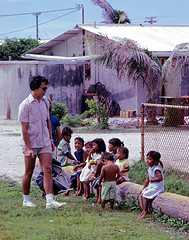
water resources. Marie Naisher from Jabat Island revealed her gratitude for the opportunity to join the workshop and made clear her desire to be part of the project when it reaches Jabat.
“This was my very first time taking part in such training, and I discovered a lot from the visitor speakers, group activities, and the website visit. I now understand the significance of clean water and how to sanitize it. I’m fired up about the ACWA project coming to Jabat and ready to assist when it gets here,”she said. Don Kobney, an ACWA site coordinator from Santo, Kwajalein, likewise shared his excitement.”The workshop and site see improved my self-confidence and understanding of the water tank installation.
Seeing the 15,000-gallon flatpack modular water tank firsthand offered me a clear understanding of the system, and I’m eagerly anticipating sharing this knowledge with my neighborhood, “he stated. By the workshop’s end, participants were much better geared up to comprehend environment modification and its local effects, drive adaptation and mitigation efforts, particularly in water security, and use brand-new resources to affect their neighborhoods positively. ACWA is enabled thanks to the assistance of the Green Climate
Fund, with the task co-financed by the Government of the Republic of the Marshall Islands
. The Marshall Islands: Skills Training and Vocational Education Project Evaluates the performance of the project and highlights lessons. Provides inputs to two more comprehensive evaluations- the local evaluation of ADB assistance for the Pacific and the unique assessment study on Millennium Development Goals. The low educational achievement and lack of Marshallese skilled workers were mostly due to the low quality of fundamental education, absence of access to education in the external islands, and weaknesses in skills training and the occupation and technical education system.
These supported an economy marked by high joblessness because of constrained economic sector growth and government downsizing. Unemployment was particularly high among the youth and women in the outer islands. Suitable local knowledgeable personnel for existing job vacancies
were not available, hence the importation of appropriately knowledgeable foreign employees. Thus, there was an inequality between available tasks and skills of the Marshallese labour force. These conditions supplied the effort for the Government
of the Marshall Islands to prioritize technical and professional education training reforms. In 2000, ADB approved a loan for $9.1 million to improve skills training to provide well-trained workers needed for continual economic and social advancement. This was to be attained through an integrated nationwide abilities training system. The task consisted of four elements: development of a career awareness program, abilities training improvement, boosted abilities training opportunities for females and youth, and institutional conditioning. The anticipated outcome was increased income-generating chances and work for students, especially ladies and youth in the external islands. Overall, the job was ranked unsuccessful. Minimal development was achieved in making the task responsive to the requirements of its beneficiaries and private-sector companies. The long-standing weakness of bad numeracy and literacy competencies
amongst public primary and secondary school graduates and dropouts getting in college or participating in voc-tech education could be partly attributed to the poor quality of standard education. The project was supply-driven and might not develop a strong linkage with private sector requirements or align its activities with the requirements of the labour market. The status of the technical and occupation education training system has actually stayed essentially the same after project completion. The research study put forward that ADB might encourage the Government of the Marshall Islands, through assessment and policy discussion, to follow through on the government’s
dedication to establishing a committed labour details system to connect technical and employment education training program offerings with market demand. Although the job set up a labour market information system, in the absence of internal staff capability at the National Training Council, it was not completely functional.